Renting in Honmachi & Sakaisuji-Honmachi, Osaka
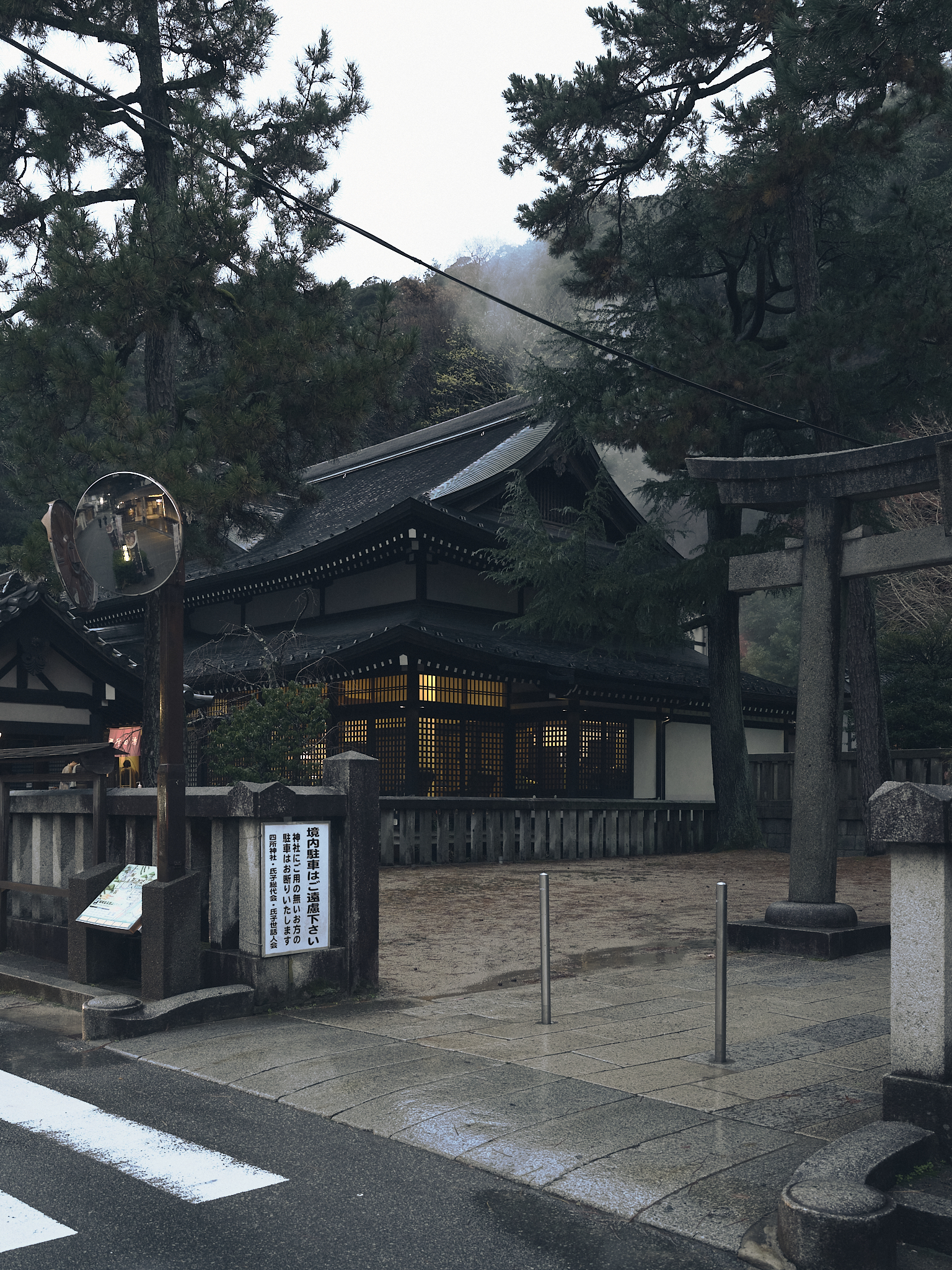

Honmachi and Sakaisuji-Honmachi sit at the geographic and economic heart of Osaka. Two stations, one reality: this is where the city works. Corporate towers, financial institutions, trading companies, legal firms — the density of business activity per square meter here is unlike anywhere else in the Kansai region. And for foreigners relocating to Osaka for professional reasons, these two neighborhoods have a clear, logical appeal. You work here. You want to live here. It makes complete sense.
What makes less sense — until you've spent time inside the Osaka rental market — is why finding an apartment in this area as a foreigner is significantly harder than the central location and seemingly modern infrastructure might suggest. The buildings are sleek. The stations are efficient. The area looks approachable. But the rental market here operates by its own logic, and that logic was not designed with foreign residents in mind.
This guide is not a checklist. It's an honest map of what you're about to navigate.
The distinction between Honmachi and Sakaisuji-Honmachi matters less than most newcomers think. They are two stations that serve a shared urban fabric — a grid of wide business avenues stretching across central Chuo-ku, roughly between Shinsaibashi to the south and Yodoyabashi to the north.
Honmachi Station is served by the Midosuji Line (the red line — Osaka's main artery) and the Chuo Line. It's one of the busiest transfer points in the city, with direct access to Umeda in four minutes and Namba in three. For commuting, it's almost impossible to beat.
Sakaisuji-Honmachi Station, a short walk east, is served by the Sakaisuji Line and the Chuo Line. Slightly quieter in atmosphere, it shares the same business district context but has a more neighborhood-like feel in its immediate surroundings — a few more local restaurants, slightly narrower streets, a slightly lower price premium.
Together, these two stations define one of the most connected residential zones in Osaka. You are, by any measure, in the center of everything.
But centrality in Osaka does not automatically translate to accessibility — especially in the rental market.
This is a question worth asking before you start searching, because the answer shapes everything about how the rental market behaves.
Honmachi's residential population skews heavily toward Japanese professionals in their 30s and 40s — people who work in the financial and corporate sector, who signed long-term leases, and who rarely move. Turnover is lower here than in areas like Namba or Fukushima. That means fewer listings become available at any given time, and when they do, they tend to attract strong competition quickly.
The foreign resident presence in this area is real but concentrated. International companies have long established offices here, and their expat employees — often on corporate relocation packages — have historically been the primary foreign renters in the zone. This has two effects: some landlords in the area do have experience with foreign tenants, which is a positive. But that experience has often been mediated through large relocation agencies and corporate guarantees, not through individual foreign applicants navigating the market independently.
If you are arriving without a corporate housing package, you are entering a market that was not specifically built for you — and that gap matters.
The Osaka rental market has a well-documented structural challenge for foreign residents: many landlords operate quiet exclusion policies that never appear in any listing. This is not unique to Honmachi — it exists across the city. But in this particular area, it takes a specific form worth understanding.
Properties in the Honmachi zone tend to be managed by mid-to-large property management companies rather than individual landlords. This is generally considered a positive signal for foreign applicants — corporate property managers are more process-driven and less likely to apply purely personal biases. However, these same companies apply strict, systematic screening criteria, and foreign applicants often fail screening not because of prejudice, but because of paperwork and documentation gaps.
In this area, a property described internally (not publicly) as "foreigner-acceptable" typically means:
None of this appears on Suumo, Athome, or any public listing platform. It lives in the internal notes of agencies and property managers — and only professionals with active relationships in this market have access to it.
This is one of the structural reasons why searching independently in this area — even with perfect Japanese — rarely delivers the same results as going through a broker with genuine local relationships. The real estate search process in Japan is far more opaque than it appears from the outside.
Online listings for Honmachi and Sakaisuji-Honmachi look clean, professional, and comprehensive. The photos are good. The floor plans are detailed. The station distances are accurate. None of that is the problem.
The problem is everything that isn't listed.
Age of the building vs. quality of the listing. Many buildings in this area were constructed in the 1980s and 1990s — structurally sound and well-maintained, but with older contract formats that some management companies have never updated. These older contracts occasionally contain language that complicates or blocks applications from foreign nationals on certain visa types. You won't know this from the listing.
Guarantor company compatibility. The guarantor (保証会社) assigned to a building determines, in practice, which applicants can be approved. Not all guarantor companies accept foreign residents, and those that do often apply different conditions based on visa type, employment status, and income documentation. In the Honmachi area, some high-end buildings work exclusively with guarantors that have historically rejected non-permanent residents. This is not reflected anywhere in the listing.
The "first month free" trap. Some listings in premium central areas advertise initial incentives (free rent months, reduced key money) to attract applicants. These offers often come with stricter screening criteria or longer mandatory lease terms. The incentive is real. The conditions attached to it are buried.
Minimum income thresholds. Unlike some outer neighborhoods, properties in this zone routinely apply formal income verification requirements — often set at 36x the monthly rent in annual salary. For freelancers, self-employed applicants, or those on variable income structures, this creates a real barrier that has nothing to do with your actual financial reliability.
Honmachi is one of the more expensive residential zones in Osaka. That's not to say it's inaccessible — but your expectations need to be calibrated to the reality of a premium central business district.
As a general reference (market data subject to fluctuation):
These are rental figures. Initial move-in costs in Japan — which include security deposit (shikikin), agency fee, guarantor fee, and first month's rent — typically represent 3 to 5 times the monthly rent upfront. On a ¥100,000/month apartment, budget between ¥300,000 and ¥500,000 to move in. And that's before furnishing.
Properties with a more realistic picture of what renting in Osaka costs exist across the city — but Honmachi is not where you'll find budget options. If cost is a primary constraint, this area will work against you. If proximity to work and urban convenience is the priority, the premium is genuinely justified.
The Honmachi and Sakaisuji-Honmachi zone offers a distinct mix of property types, each with different implications for foreign applicants.
The area has a notable concentration of high-rise condominium buildings — what the Japanese market calls tower mansions. These properties are well-known for their amenities: concierge, gym, delivery lockers, panoramic views. They also tend to have more standardized management processes, which can be either an advantage or an obstacle depending on how their screening systems were designed. Some are very open to foreigners. Others apply their institutional processes in ways that systematically disadvantage foreign applicants. You can rarely tell from the outside which is which.
The majority of the residential stock here is mid-rise buildings from the bubble era. These properties tend to have larger floor plans relative to their price, which makes them attractive. The trade-off: older contracts, older management relationships, and more variable landlord attitudes. Some of these buildings have had the same tenants for 10–20 years, meaning turnover is low — but when a unit does become available, the decision-making process is often more personal and less predictable.
A smaller but growing segment: compact newer buildings (post-2010) designed for single professionals or couples. These tend to have more standardized and transparent management, better energy efficiency, and modern contracts. They also tend to be the most likely to have been explicitly designed with foreigner-compatible management structures, particularly those operated by larger property management firms with international experience.
Every foreign renter in Japan eventually encounters the guarantor requirement. In Honmachi, this challenge is amplified by the premium nature of the market.
Property managers in this area work with a specific set of guarantor companies — often higher-tier providers that cater to business district properties. These companies apply more rigorous income and documentation checks than the average guarantor company used in peripheral neighborhoods. The process is more thorough on both sides: they verify income, employment stability, and residency status more carefully.
For foreigners with a stable full-time employment contract and a clear visa status, this is navigable. For foreigners who are:
...the guarantor stage is where applications most commonly break down in this zone specifically. The guarantor landscape in Japan is complex and not all providers handle every visa type. Getting the right combination of property, management company, and guarantor for your specific profile is not something you can systematically identify from a public listing platform.
Osaka's rental market has seasonality, and the Honmachi area is no exception. The primary rental peak runs from January through March — the pre-fiscal-year period when Japanese companies relocate employees and new graduates begin contracts. During this window, good properties in this zone move fast. Very fast. Applications are sometimes decided within 24–48 hours of a viewing, and the competition is real.
If you are looking to move into this area between January and March, understand that you are competing against a broad pool of applicants — including Japanese applicants with domestic guarantors, established credit histories, and none of the documentation friction that foreign applicants face. Starting your search early, having documentation prepared in advance, and having professional support in place before listings emerge is not a luxury in this context. It's a practical requirement.
The secondary peak (September–October) is less intense but follows similar dynamics. Outside these windows, inventory is thinner but the search process is calmer and more negotiable.
One lesser-discussed option for foreigners wanting to secure housing before arriving: it is possible in some cases to complete the rental process before you land in Japan. This is not universally available — it depends on the property, management company, and guarantor — but it exists, and it's particularly relevant for professionals with confirmed employment start dates.
The Honmachi rental market rewards insider knowledge — not in a corrupt or unfair sense, but in a structural one. The information that determines whether your application succeeds or fails is largely invisible to the public. It lives in agency databases, management company notes, and the accumulated experience of professionals who work in this market every day.
A broker with genuine relationships in this zone does not simply send you listings. They pre-screen properties against your specific profile — visa type, income documentation, employment structure, move-in timeline — before you invest time in viewings. They know which management companies in the area are genuinely foreigner-compatible and which ones will waste your time with a screening process designed to produce a polite rejection. They know which guarantor companies will accept your profile and which properties those companies are paired with.
This is precisely what Maido Estate does for foreign clients navigating central Osaka. Not as a real estate portal, but as a professional intermediary with the market knowledge to match your real profile — not an idealized version of it — to the properties where your application is actually viable.
The alternative — searching independently, applying through general platforms, hoping for the best — is not impossible. But in a market as tight and as opaque as Honmachi's, it consistently produces the same outcome: good applicants applying to the wrong properties, getting rejected for reasons they never learn, and losing weeks in the process.
If you want to understand how working with the right agent in Osaka actually changes the outcome — not just the experience — this area is one of the clearest illustrations of why it matters.
You can also read more about how Maido Estate searches for the right apartment on your behalf — specifically designed for foreign residents navigating a market that wasn't built for them.
If Honmachi proves difficult — or if your budget or profile makes this particular zone hard to crack — several adjacent neighborhoods offer a very similar quality of life with more accessible rental markets.
One stop east on the Chuo Line. Quieter residential character, slightly lower price points, more individual landlords as opposed to large corporate managers. Tanimachi has its own distinct rental dynamics worth understanding before you search.
Two stops south on the Midosuji Line. More vibrant, more international, with a broader range of foreigner-compatible properties. Commute to Honmachi remains under 5 minutes. Finding an apartment in Shinsaibashi is a separate exercise with its own market dynamics.
Further south, a different urban character entirely — more diverse, more accessible price points, and an area where foreign residents have established a genuine community. Commute to Honmachi is around 15 minutes direct. Tennoji's rental market behaves very differently from central Chuo-ku.
Northwest, across the river, with a restaurant-dense, lifestyle-forward character and genuinely more accessible rents. Many foreign professionals who work in or near Honmachi choose to live in Fukushima precisely because the rental market is more navigable. The Fukushima apartment market rewards those who understand it.
None of these alternatives are compromises. They're simply different bets on how you want to experience Osaka while maintaining access to the business core. The right choice depends entirely on your personal priorities — and those priorities are worth discussing before you commit to a search strategy.
Honmachi and Sakaisuji-Honmachi are genuinely excellent places to live. The location is irreplaceable. The commute advantages are real. The urban environment — cafes at street level, restaurants within walking distance, a certain professional energy that suits some people perfectly — has its own appeal.
The rental market here is not hostile to foreigners. It's simply not designed for them. And that distinction matters, because the solution is not to force yourself into a system that wasn't built for you — it's to have someone in your corner who knows exactly where in that system you belong.
If you are considering a move to the Honmachi or Sakaisuji-Honmachi area and want an honest assessment of what is realistically possible for your profile — visa type, income structure, timeline, budget — reach out to Maido Estate for an initial consultation. No pressure, no sales pitch. Just a clear conversation about your actual options.
Looking for more context on renting in Osaka as a foreigner? You might also find these resources useful: