What wards to avoid in Osaka?
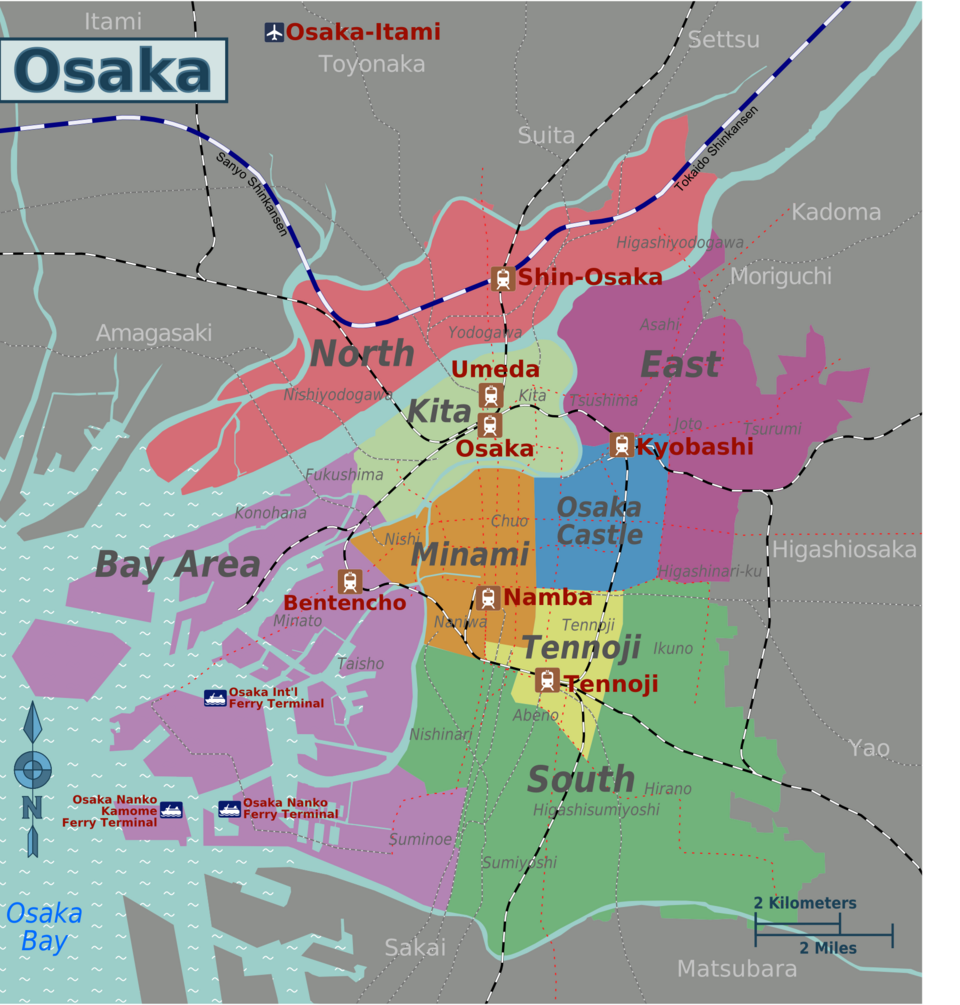

When researching where to live in Osaka, you've probably encountered warnings about certain wards or neighborhoods to avoid. Online forums and expat groups sometimes paint dramatic pictures of dangerous areas, while others dismiss these concerns entirely as outdated stereotypes. If you're trying to make informed housing decisions from abroad or early in your time in Osaka, this conflicting information creates genuine confusion.
Here's what you need to understand: Osaka is remarkably safe by global standards. Even its "roughest" areas register crime rates far below what residents of major American, European, or Latin American cities consider normal. The question isn't really whether certain Osaka wards are dangerous—it's whether they match your lifestyle expectations, comfort level with urban grit, and practical living needs as a foreign resident.
This guide provides honest, balanced analysis of which Osaka wards require careful consideration, what the actual concerns are, and how to make neighborhood decisions that work for your specific situation.
Before examining specific wards, establishing baseline reality about Osaka's overall safety prevents misplaced anxiety.
The Statistical Reality
Osaka maintains a crime index of approximately 32.79 and a safety index of 67.21 according to 2024 data. For context, Tokyo scores even better at 24.67 (crime) and 75.33 (safety), but both cities rank among the safest globally. Tokyo's marginally better statistics don't make Osaka dangerous—they reflect that Osaka is slightly more urban-feeling, with livelier entertainment districts and more visible street life.
Compared to Western cities, Osaka's safety is exceptional. London has significantly higher crime rates, New York's vary dramatically by borough with many areas far exceeding Osaka's citywide figures, and Los Angeles crime statistics dwarf Osaka's across most categories. Even Osaka's statistically highest-crime wards remain safer than average neighborhoods in most major Western cities.
What "Dangerous" Actually Means in Osaka
When Japanese people describe an Osaka ward as "dangerous," the reference point is Japanese norms—a society with extraordinarily low crime where leaving your phone on a café table while using the restroom is generally safe. An area that concerns Japanese residents might simply mean visible homeless populations, older buildings without pristine maintenance, or nightlife districts with solicitors and bar touts.
For foreigners from countries with significant urban crime, these same areas often feel perfectly manageable. The "worst" neighborhood in Osaka rarely involves concerns about violent crime, mugging, or serious personal safety threats. The issues are more about neighborhood character, aesthetic conditions, and comfort levels rather than genuine danger.
The Perception Gap
Understanding that Japanese people's neighborhood assessments reflect their baseline expectations—not objective danger levels—is crucial. If a Japanese colleague expresses concern about you living in a certain ward, they're often worried about neighborhood prestige, cleanliness standards, or property values rather than fearing for your safety.
This perception gap creates real estate market effects. Wards with "bad" reputations among Japanese residents offer significantly cheaper rent because demand is lower. For foreign residents willing to accept neighborhoods that Japanese people avoid, substantial savings become accessible without commensurate risk increases.
No discussion of Osaka wards can avoid Nishinari—the ward with the most notorious reputation, the most dramatic online warnings, and ironically, one of the largest concentrations of foreign residents in the city.
The Historical Foundation of Reputation
Nishinari developed as Osaka's day laborer district, particularly the area known as Kamagasaki (now officially called Airin). From the early 1900s through the 1990s, this area served as a gathering point for construction workers, offering cheap doya (basic lodging houses) and employment agencies for temporary labor. The district saw riots between laborers and police during the 1960s-1990s, cementing its rough reputation nationally.
Additionally, Nishinari houses Tobita Shinchi, Western Japan's largest red-light district, and historically served as headquarters for yakuza organizations. These elements combined to create a ward that Japanese people consider fundamentally undesirable for residence—a reputation that persists despite dramatic changes over recent decades.
The Contemporary Reality
Today's Nishinari differs substantially from its historical reputation. The area has undergone significant gentrification, particularly accelerated by tourism growth and property investment. New hostels, guesthouses, and budget hotels serving international travelers have transformed formerly derelict buildings. Young Japanese and foreign residents drawn by rock-bottom rents—often 30-40% below comparable central Osaka properties—have moved in, gradually changing neighborhood character.
The Airin area still has visible homeless populations, particularly around Triangle Park and Shin-Imamiya Station. Streets show more wear, with older buildings, less meticulous maintenance, and aesthetic roughness unfamiliar in most Japanese cities. But violent crime remains rare, and residents report that actual safety concerns are minimal compared to perception.
Who Actually Lives in Nishinari
Here's a telling fact: Nishinari Ward has one of Osaka's highest concentrations of foreign residents—approximately 6% of the city's foreign population lives here. Many of these are students, working holiday visa holders, budget-conscious young professionals, and long-term travelers who prioritize affordability and central access over neighborhood prestige.
The practical advantages are substantial: rents of ¥30,000-50,000 monthly for studios that would cost ¥70,000-90,000 in central wards, exceptional transportation connectivity (JR, Nankai lines, Midosuji subway), walking distance to Namba and Tennoji, and proximity to Kansai International Airport via Nankai line.
The Real Considerations
If you're considering Nishinari, the genuine concerns aren't about safety—they're about:
Aesthetic environment: Streets are visibly less polished, with older infrastructure and occasional littering that shocks people accustomed to Japanese cleanliness standards.
Homeless presence: Seeing homeless individuals sleeping in parks or station areas can be unsettling if you're uncomfortable with visible poverty, though they rarely interact with or bother residents.
Social stigma: Telling Japanese acquaintances you live in Nishinari often elicits surprise or concern, requiring repeated explanations about your choice.
Neighborhood character: The area lacks the "nice residential neighborhood" feel—it's grittier, more transient, and less community-oriented than established residential wards.
For single foreign residents comfortable with urban environments, prioritizing budget over prestige, and planning relatively short-term stays, Nishinari offers genuine value. For families, those seeking traditional Japanese residential environments, or individuals who value neighborhood reputation, it's less suitable.
Ikuno Ward houses Osaka's largest foreign resident population—over 20% of the city's registered foreign nationals live here. The ward includes Tsuruhashi, famous for its Korean community and vibrant yakiniku restaurant scene.
The Demographic Reality
Ikuno's foreign concentration primarily reflects its historical role as home to Osaka's established Korean-Japanese (Zainichi) community. Generations of families have lived here, creating authentic Korean cultural presence including restaurants, shops, and Korean language signage throughout Tsuruhashi and surrounding areas.
In recent years, Ikuno has also attracted residents from various Asian countries—Vietnamese, Nepalese, Chinese—drawn by relatively affordable rents and existing multicultural atmosphere. This diversity creates neighborhoods where foreign residents don't stand out, potentially appealing for those who prefer blending into multicultural communities rather than being conspicuous in homogeneous Japanese neighborhoods.
Safety Perceptions vs. Reality
Some parts of Ikuno Ward, particularly backstreets away from main stations, show visible signs of lower economic investment—older buildings, occasional littering, and less meticulous public space maintenance. Crime statistics show slightly higher rates than Osaka's lowest-crime wards, but remain low by international standards.
The concerns Japanese people express about Ikuno often reflect ethnic prejudice rather than objective safety issues. The significant Korean population triggers biases that unfortunately persist in Japanese society, coloring perceptions of the entire ward. Foreign residents without these cultural prejudices often find Ikuno perfectly comfortable.
Practical Considerations
For foreign residents, Ikuno offers several advantages: genuine multiculturalism rare in most Japanese cities, excellent food options particularly for Korean cuisine enthusiasts, affordable rent compared to central wards, and proximity to Osaka's major areas via subway and train connections.
The trade-offs include less polished urban environment, potential communication challenges in areas with limited English, fewer foreign-oriented services compared to central districts, and navigating Japanese people's biased perceptions if you mention living there.
Ikuno works well for foreign residents who value authentic multiculturalism, appreciate non-Japanese Asian cultures, prioritize budget over neighborhood prestige, and aren't concerned with others' perceptions of their address.
Naniwa Ward includes parts of Namba, Osaka's southern entertainment and commercial center, but also contains areas like Shin-Imamiya and Ebisucho that border Nishinari and share some of its character.
The Geographic Split
Naniwa Ward essentially divides into two distinct zones. The northern portions around Namba Station and Minatomachi are vibrant, tourist-heavy commercial districts with high foot traffic, restaurants, shopping, and entertainment. These areas are perfectly safe and popular with foreign residents despite noise and crowds.
The southern portions near Shin-Imamiya Station become noticeably grittier. This area borders the Airin district of Nishinari, and shares similar characteristics—older buildings, budget accommodations, visible homeless populations, and the aesthetic wear that concerns some residents.
What to Actually Consider
If considering Naniwa Ward properties, location matters critically. Properties near central Namba offer urban convenience and safety with the caveat of constant tourist crowds, noise, and commercial rather than residential character. Properties near Shin-Imamiya or Ebisucho offer similar affordability advantages to Nishinari with comparable trade-offs around neighborhood aesthetics and polish.
The ward isn't uniformly rough or uniformly polished—you must evaluate specific neighborhoods rather than dismissing or embracing "Naniwa Ward" categorically.
Chuo Ward includes Osaka's premier entertainment districts—Dotonbori, Shinsaibashi, and parts of Namba. This creates a paradox: these areas are simultaneously extremely popular with tourists and residents while also registering higher crime statistics than residential wards.
Understanding the Statistics
Chuo Ward's elevated crime rates primarily reflect concentration of nightlife venues, bars, clubs, and entertainment establishments. Late-night activity, alcohol consumption, and tourist crowds create environments where petty crime occurs more frequently—bag snatching, drink spiking targeting intoxicated individuals, solicitation scams, and occasional fights between drunk patrons.
These issues affect people using nightlife establishments far more than residents living in the ward. If you rent an apartment in Chuo Ward's residential sections, your daily experience differs dramatically from the nighttime entertainment district experience that drives crime statistics.
The Residential Reality
Many Chuo Ward properties offer excellent value for foreign residents who want central location and don't mind nightlife proximity. The constant crowds and activity provide safety through visibility—streets are never empty, police presence is substantial, and serious crime remains rare because of constant surveillance and foot traffic.
The downsides include noise (particularly on weekend nights), transient tourist atmosphere rather than neighborhood community feel, limited family-friendly infrastructure (fewer parks, schools, residential services), and rental prices that reflect central location despite the ward's mixed reputation.
Chuo Ward suits young professionals who embrace urban energy, appreciate nightlife proximity, don't prioritize quiet residential environments, and value central access above neighborhood tranquility.
Yodogawa Ward demonstrates how Osaka wards contain dramatic internal variation. Some sections like Juso and areas near Shin-Osaka Station are working-class but perfectly functional. Others have pockets that concern residents.
The Internal Variation
Juso, accessible via Hankyu line from Umeda, offers affordable rent and direct access to central Osaka. The area has a lively entertainment district with bars and small clubs, creating late-night activity that some residents find undesirable. However, safety concerns are minimal—the area simply has a less polished, more working-class character than premium neighborhoods.
Areas around Shin-Osaka Station cater heavily to business hotels and corporate travelers. Residential properties here offer convenience for Shinkansen access but lack neighborhood character, feeling more like commercial zones where people sleep between business trips than genuine communities.
Practical Assessment
Yodogawa Ward shouldn't be categorically avoided. Instead, evaluate specific neighborhoods within it. The ward offers value for budget-conscious foreign residents who don't require premium residential environments and appreciate direct access to central Osaka and transportation hubs.
Understanding where foreign residents concentrate provides useful information about which areas successfully balance accessibility, affordability, and livability for non-Japanese residents.
According to recent data, Osaka's foreign resident distribution clusters significantly in several wards: Ikuno Ward (over 20% of Osaka's foreign population), Hirano Ward (approximately 6%), Nishinari Ward (approximately 6%), Chuo Ward (approximately 6%), and Naniwa Ward (approximately 6%).
This distribution tells a revealing story. Foreigners disproportionately choose wards that Japanese residents often avoid or view negatively—precisely because these wards offer affordable rent, central access, and existing foreign communities that reduce cultural friction. The areas traditionally considered "safest" and most desirable by Japanese standards—Kita Ward (Umeda), Fukushima Ward, parts of Tennoji and Abeno—have smaller foreign populations primarily because rent prices exclude budget-conscious international residents.
The question "which wards should I avoid?" fundamentally misframes how to approach housing decisions in Osaka as a foreign resident.
The Real Framework
Instead of avoiding entire wards, consider these practical factors:
Your budget reality: If rent affordability is critical, wards with rougher reputations like Nishinari and parts of Ikuno deliver genuine value without commensurate safety risks. If budget is flexible, you can choose more polished neighborhoods.
Your cultural comfort zone: If visible poverty, urban grit, and aesthetic imperfection disturb you, avoid wards like Nishinari regardless of safety statistics. If you're comfortable with these realities, substantial savings await.
Your social priorities: If Japanese social acceptance and avoiding stigma matter, understand that certain addresses carry reputational costs. If you prioritize practical considerations over others' perceptions, this concern becomes irrelevant.
Your housing timeline: For short-term stays (six months to two years), tolerance for less desirable neighborhoods often makes sense given savings. For long-term settlement, investing in more established residential areas may deliver better quality of life.
Your family situation: Single adults navigate rougher neighborhoods comfortably. Families with children typically prioritize different factors—school proximity, parks, quiet streets, community feel—that guide them toward traditional residential wards.
The Professional Guidance Value
Here's what generic online warnings about Osaka wards can't tell you: which specific properties within these wards offer good value versus which present genuine problems, how landlord acceptance of foreigners varies dramatically within supposedly "bad" wards, where the invisible boundaries exist between safe and sketchy within the same postal code, and which buildings have English-speaking management versus which will create ongoing communication challenges.
Real estate professionals working extensively with foreign residents understand these micro-geography details that macro ward-level discussions miss. They know which Nishinari properties are perfectly fine versus which even they wouldn't recommend, which Ikuno streets feel comfortable versus uncomfortable, and which buildings in entertainment districts are resident-friendly versus tourist chaos.
This knowledge directly affects your living experience—and often your rent burden. The difference between finding a gem property in an "avoided" ward versus making a poor choice that supports every negative stereotype is the difference between savings and misery.
Should you avoid certain Osaka wards? Not categorically. Should you approach some areas with more careful property selection and realistic expectations? Absolutely.
Osaka's safest areas for foreign residents prioritizing comfort and polish: Fukushima Ward, Tennoji/Abeno Ward (away from rougher pockets), Kita Ward (Umeda area), northern portions of Chuo Ward, and Minato Ward.
Osaka's affordable areas requiring careful property selection: Nishinari Ward (exceptional value, requires tolerance for urban grit), Ikuno Ward (genuine multiculturalism, variable by specific neighborhood), Southern Naniwa Ward (border areas with Nishinari), and Yodogawa Ward (specific neighborhoods like Juso).
Osaka's areas where entertainment/nightlife affects character more than safety: Central Chuo Ward (Dotonbori, Shinsaibashi), Central Naniwa Ward (Namba), and Kita Ward nightlife districts (Kitashinchi).
The ward that deserves your genuine caution: None, really. Even Osaka's roughest wards remain safer than average neighborhoods in most global cities. Your concerns should focus on livability, comfort, and practical suitability—not safety in any absolute sense.
Ready to navigate Osaka's neighborhoods with local expertise that goes beyond generic warnings? At Maido Estate, we help foreign residents find properties that deliver genuine value while matching their actual comfort levels and lifestyle needs. Our multilingual team (English, French, Japanese) knows Osaka's micro-geography intimately—which properties in "avoided" wards are actually excellent choices, which supposedly safe areas have hidden issues, and how to evaluate specific buildings rather than making decisions based on ward-level reputations. We've helped hundreds of foreign residents find homes across Osaka's full spectrum of neighborhoods, understanding that what works depends on your specific situation rather than one-size-fits-all advice. Contact Maido Estate today to discuss your priorities and discover which Osaka neighborhoods genuinely suit your needs—not just which sound good online.
About Maido Estate: Licensed real estate agency in Osaka specializing in helping international residents with renting, buying, and property management throughout the Kansai region. Our team provides balanced, honest neighborhood guidance based on actual living experience, not stereotypes or outdated reputations.


