Property Management in Japan for Non-Resident Owners
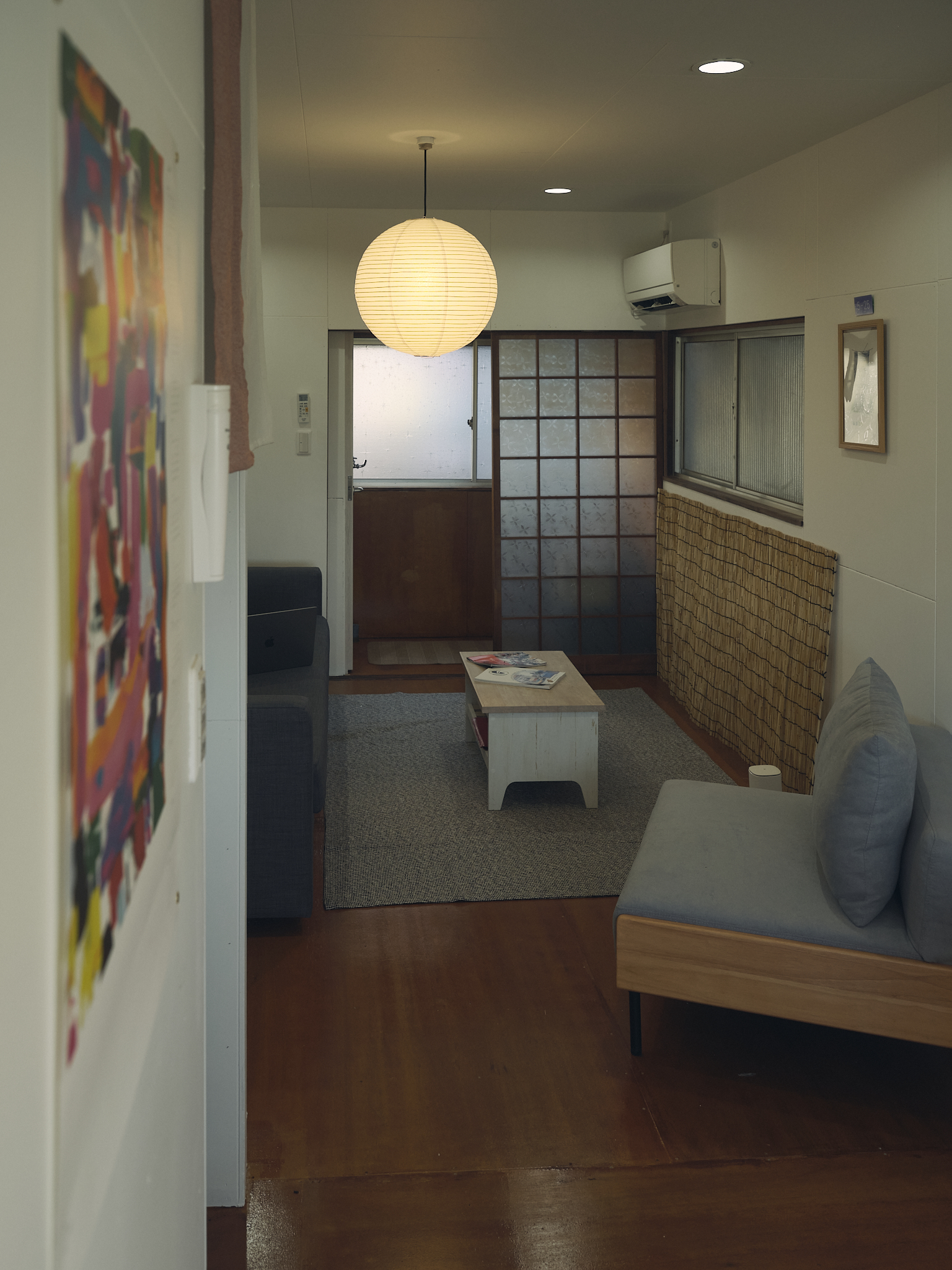

Buying property in Japan as a foreigner is one thing. Managing it from overseas is another — and it's the part that most buyers don't think through carefully enough before they sign. Japan's property management ecosystem works well for Japanese owners who are present, Japanese-speaking, and familiar with the system. For non-resident foreign owners managing an investment from Singapore, Paris, Sydney, or New York, the same system presents a set of practical challenges that don't resolve themselves without deliberate planning.
This isn't a reason not to invest. Osaka's residential investment market offers genuine value, and the management infrastructure exists to support absent owners. But the way that infrastructure works — what management companies actually do, what they don't do, where communication breaks down, and what it costs — is poorly understood by most first-time foreign buyers. This article explains the reality of managing Japanese property from overseas, so that you can build a structure that works before you need one.
IN THIS ARTICLE
In Japan, the relationship between a property owner and a management company (kanri gaisha) is central to how the rental market functions. Unlike some markets where landlords manage properties directly and agencies simply list them, most Japanese landlords — including the majority of individual investors — delegate day-to-day management to a kanri gaisha. This company sits between the owner and the tenant, handling rent collection, maintenance coordination, lease renewals, and tenant communication.
The kanri gaisha system developed partly out of cultural preference — Japanese landlords, particularly older ones, often prefer not to interact directly with tenants — and partly out of practical necessity in a dense urban rental market where individual unit management at scale is impractical. The result is a professional management layer that is deeply embedded in how Japanese rental property works.
There are two main contractual structures under which a kanri gaisha operates. In the delegation model (kanri itaku), the management company acts as your agent — collecting rent, managing the property, and remitting income to you after deducting fees. You remain the legal landlord, bearing the financial risk of vacancy.
In the sublease model (saburīsu or master lease), the management company itself becomes your tenant. They pay you a fixed guaranteed rent regardless of whether the unit is occupied, then sublet the property to an end tenant at a higher rate, keeping the difference as their income. The guaranteed rent is typically 80–90% of market rent, but the appeal for absent owners is obvious: zero vacancy risk, predictable monthly income, no involvement in tenant relations.
The sublease model sounds attractive and is widely marketed to foreign investors. It deserves careful scrutiny. Sublease contracts in Japan have a history of being modified unilaterally by management companies — particularly in downturns — with rent guarantees reduced after the initial fixed period. The fine print of sublease agreements, and the financial health of the company providing the guarantee, matter enormously. This is not an area where signing without a thorough Japanese-language review is wise.
Foreign property owners frequently arrive at their first management company relationship with an assumption set borrowed from Western markets, where a property manager is expected to handle nearly everything on the owner's behalf. The Japanese kanri gaisha model is more defined — and more limited — than that.
The gap between what a non-resident foreign owner needs and what a standard kanri gaisha provides is significant. The management company will manage the property competently — in Japanese, within its defined scope, on its own timeline. The owner's job is to ensure that everything outside that scope is covered by someone else.
Management fees in Japan are typically expressed as a percentage of monthly rent. For standard long-term residential rental management, the range is 5–10% of monthly rent, with 5–7% common for straightforward single-unit management and higher rates applying to smaller properties, furnished units, or properties requiring more active management.
Beyond the monthly management fee, a kanri gaisha will also charge:
The true annual cost of property management — accounting for the monthly fee, re-tenanting costs amortized over average tenancy length, and maintenance markups — is typically in the range of 10–15% of gross rental income for a well-occupied property. For investment calculations, this is the figure to use, not the headline management fee percentage alone.
This is the dimension of non-resident ownership that creates the most frustration, and it deserves direct treatment. Japanese property management companies communicate in Japanese. Their systems, their correspondence, their invoices, their maintenance reports, their lease renewal notices — all of it is in Japanese. There is no English-language management portal, no bilingual statement of account, no translated summary of what happened to your property last quarter.
For a non-resident owner who doesn't read Japanese, this creates a structural information asymmetry. You are dependent on either your own language ability, a trusted intermediary who can translate and interpret on your behalf, or — most commonly and most problematically — simply trusting that everything is fine because nothing alarming has reached you.
The management company is not withholding information maliciously. They are operating in their normal workflow, in their normal language. But the owner who can't read their communications will miss: rent increases or adjustments proposed at renewal, maintenance issues that require owner approval above a cost threshold, changes in tenant circumstances that affect the guarantor arrangement, and — critically — the annual tax-related documentation that non-resident owners are required to manage.
Non-resident owners who manage this well typically do one of two things: they work with a management company or intermediary that provides bilingual reporting and owner communication as a deliberate service offering, or they have a trusted Japan-based representative — an agent, an accountant, or a bilingual property adviser — who reviews management company communications on their behalf and flags anything requiring attention.
The worst-case scenario is an absent owner with a Japanese-only management company and no intermediary, who first learns that something is wrong when rent stops arriving in their bank account. This scenario is entirely avoidable with the right structure in place from the start.
One of the most consequential decisions in property management is tenant selection. A good tenant — reliable, careful, communicative — makes ownership almost effortless. A problematic tenant means unpaid rent, maintenance disputes, neighbor complaints, and potentially a difficult and expensive eviction process. In Japan, where evicting a tenant from a standard lease is legally difficult and procedurally slow, the initial selection matters more than in many other markets.
For present owners, tenant selection is a collaborative process with the management company — the owner can review applications, ask questions, and exercise judgment. For absent non-resident owners, the practical reality is that tenant selection is largely delegated to the management company, whose incentive is to fill the unit quickly rather than to optimize for tenant quality on the owner's behalf.
Japanese tenant screening involves income verification, guarantor company approval, and sometimes a degree of informal assessment of the applicant's profile. Management companies vary significantly in how rigorously they apply these criteria and how much they communicate the trade-offs to the owner. A management company eager to minimize vacancy may present an application for owner approval that a more careful reviewer would have questions about.
For non-resident owners, having a local representative who understands the tenant screening process and can review applications with your interests — not the management company's vacancy rate — in mind is a meaningful protection. This is particularly relevant for properties at the upper end of the market, where the quality of the tenant affects not just rent reliability but property condition over the course of a two-year lease.
Properties require maintenance. Appliances age and fail. Water heaters, air conditioning units, and washing machine connections are the most common failure points in Japanese apartments. When something breaks, the management company will typically coordinate with their preferred contractors — but the cost authorization process can create friction for owners who aren't easily reachable, who don't respond quickly to Japanese-language requests, or who are in time zones where a same-day decision is practically impossible.
Most management contracts set a cost threshold below which the management company can authorize repairs without owner approval — typically ¥50,000–¥100,000. Above that threshold, they need owner sign-off before proceeding. For a non-resident owner who receives this request in Japanese at 2am local time, with a tenant waiting for a repair, the practical response time is often not what the situation calls for. Management companies will sometimes proceed without approval and present the invoice afterward, which is a different kind of problem.
The solution is a clearly documented protocol established at the start of the management relationship: who can be contacted, in what language, on what timeline, and up to what cost level. This is a conversation that needs to happen before the first repair request arrives — not during it.
If you own a condominium unit (manshon) rather than a standalone property, building-level maintenance is handled by the building management association (kanri kumiai). Monthly management fees (kanrihi) and repair reserve funds (shūzen tsumitatekin) are automatically charged to your account. Annual general meetings of the management association — conducted in Japanese — address building-level decisions. Absent owners who don't participate are implicitly accepting whatever decisions are made. For owners with significant holdings in a single building, this passivity can occasionally have financial consequences.
The management structure for a standard long-term rental is meaningfully different from that required for a short-term rental (minpaku) operation. Investors attracted to Osaka's tourism market and the potential of Airbnb-style income need to understand that the management requirements for short-term rental are substantially more intensive — and that the management fee structures reflect this.
A licensed minpaku operation requires active, daily management: guest check-in and check-out coordination, cleaning between stays, linen turnover, maintenance response on a rapid timeline, pricing management across booking platforms, and guest communication in potentially multiple languages. This is closer to hotel operations than property management in the traditional sense.
Specialist short-term rental management companies in Osaka exist and operate in this space. Their fees are substantially higher than standard residential management — typically 15–25% of gross rental income — reflecting the operational intensity. For non-resident owners, the quality of the short-term rental manager is probably the single most important variable in the investment's performance, because the owner has essentially no visibility into day-to-day operations from overseas.
For a grounded assessment of the short-term rental investment model in Osaka — including realistic yield expectations and the regulatory framework — our articles on investing in Airbnb in Osaka, the Airbnb licensing framework in Japan, and the comparison between long-term rental and Airbnb models cover the key variables in detail.
Japan's tax system imposes specific obligations on non-resident property owners that don't apply — or apply differently — to resident owners. These obligations are real, they are enforced, and they need to be built into the management structure from day one.
Rental income paid to a non-resident owner is subject to Japanese income tax at a flat rate of 20.42% on gross rental income. The law requires that this tax be withheld at source — meaning the tenant or the management company is legally responsible for deducting the tax from each rent payment and remitting it to the Japanese tax authorities. In practice, many management companies do not have a standard process for handling this for foreign owners, and the responsibility for ensuring compliance falls on the owner.
If the withholding is not correctly handled and the tax authorities identify the gap — which they do, through annual rental income reporting requirements — the liability falls on the owner, with potential interest and penalties. This is not a theoretical risk; it is a practical compliance requirement that non-resident owners need to address explicitly with their management company and tax adviser at the outset.
Non-resident owners with Japanese rental income are required to file an annual Japanese tax return. This filing must be done through a tax representative (zeimu dairi nin) based in Japan — a non-resident cannot file directly. The tax representative receives correspondence from the tax authorities on the owner's behalf and manages the filing process.
Engaging a Japanese tax accountant (zeirishi) with specific experience in non-resident owner taxation is not optional if you're earning rental income from a Japanese property. The cost of this professional relationship is modest relative to the tax exposure of getting it wrong. Our article on real estate taxes for non-residents in Japan covers the full obligation landscape in detail.
Getting rental income out of Japan and into your overseas bank account involves international wire transfer compliance — source of funds documentation, AML requirements at the receiving bank, and potentially currency conversion considerations. Management companies remit income to the owner's Japanese bank account; the international transfer from that account to your overseas account is a separate step that requires its own planning. Our guide to international wire transfers in Japan explains how this process works.
Given the complexity outlined above, the question of which management structure to use deserves more thought than most buyers give it at the time of acquisition. The right structure depends on the property type, the intended use, and the owner's own capacity for oversight.
The key criteria for selecting a kanri gaisha for a long-term rental are: experience with foreign owner clients (evidenced by bilingual communication capability, not just a claim on their website), transparent fee structures with no hidden markups, a clear and documented protocol for maintenance approvals and owner communication, and established relationships with reliable tenant-finding agencies to minimize vacancy periods.
The management company that came bundled with your property purchase — often the developer's affiliated kanri gaisha — is not automatically the best choice for a non-resident foreign owner. The default option reflects the developer's interests, not yours. Evaluating alternatives at the point of acquisition, before the first tenant is placed, is the right time to make this decision.
Investors planning to acquire multiple Osaka properties benefit from consolidating management with a single company or adviser who can provide portfolio-level oversight — aggregated reporting, coordinated maintenance, and a single point of contact for owner communication. The efficiency gains of consolidated management are real and increase with the number of properties held.
Some non-resident owners find that the most practical structure is to engage both a standard kanri gaisha for day-to-day management and a separate bilingual adviser or broker to act as the owner's representative — reviewing management company communications, approving significant decisions, and providing the strategic oversight that the kanri gaisha's operational focus doesn't cover. This adds a layer of cost but eliminates the information asymmetry that is the root cause of most non-resident ownership problems.
For buyers at the research stage, our articles on buying property in Osaka and buying property in Japan as a cash buyer cover the acquisition side in detail, and our Osaka vs Tokyo market comparison provides the investment context for understanding why Osaka attracts non-resident buyers specifically.
The gap between what a standard Japanese management company provides and what a non-resident foreign owner actually needs is where Maido Estate's work with investor clients is most directly relevant. We work with overseas owners across the full ownership lifecycle — not just at the point of acquisition, but through the ongoing management of the asset.
In practical terms, this means: helping clients evaluate and select the right kanri gaisha for their specific property and profile, acting as a bilingual intermediary between the owner and the management company when communication requires it, reviewing management reports and flagging anything that warrants the owner's attention, coordinating with tax accountants and legal advisers to ensure compliance obligations are met, and providing market context when decisions arise — rent level reviews, lease renewal terms, re-tenanting strategy — that benefit from someone with current knowledge of the Osaka market.
We operate in English, French, and Japanese across the Kansai region, which means the conversation with you, the conversation with your management company, and the conversation with the tax authorities' representatives all happen at full quality, without translation friction.
If you own property in Osaka and are managing it from overseas — or if you're evaluating an Osaka acquisition and want to understand what the post-purchase management structure will look like before you commit — the most useful first step is a direct conversation about your specific situation. No commitment, no pressure. Just a clear picture of how the system works and where the gaps are for your profile.
Reach out through our contact page or use our Room Finder to get started.
Managing Japanese property from overseas is entirely doable — thousands of foreign investors do it successfully. The ones who do it well share a common characteristic: they understood the system before they needed it, and they built the right structure before problems arose rather than after. A few key points from this article:
Osaka's investment market rewards owners who take the time to understand how it works. The structural yields available in this market are genuine — but they are realized by owners who have the right infrastructure in place, not by those who assume the system will manage itself.


