International Student Housing in Osaka
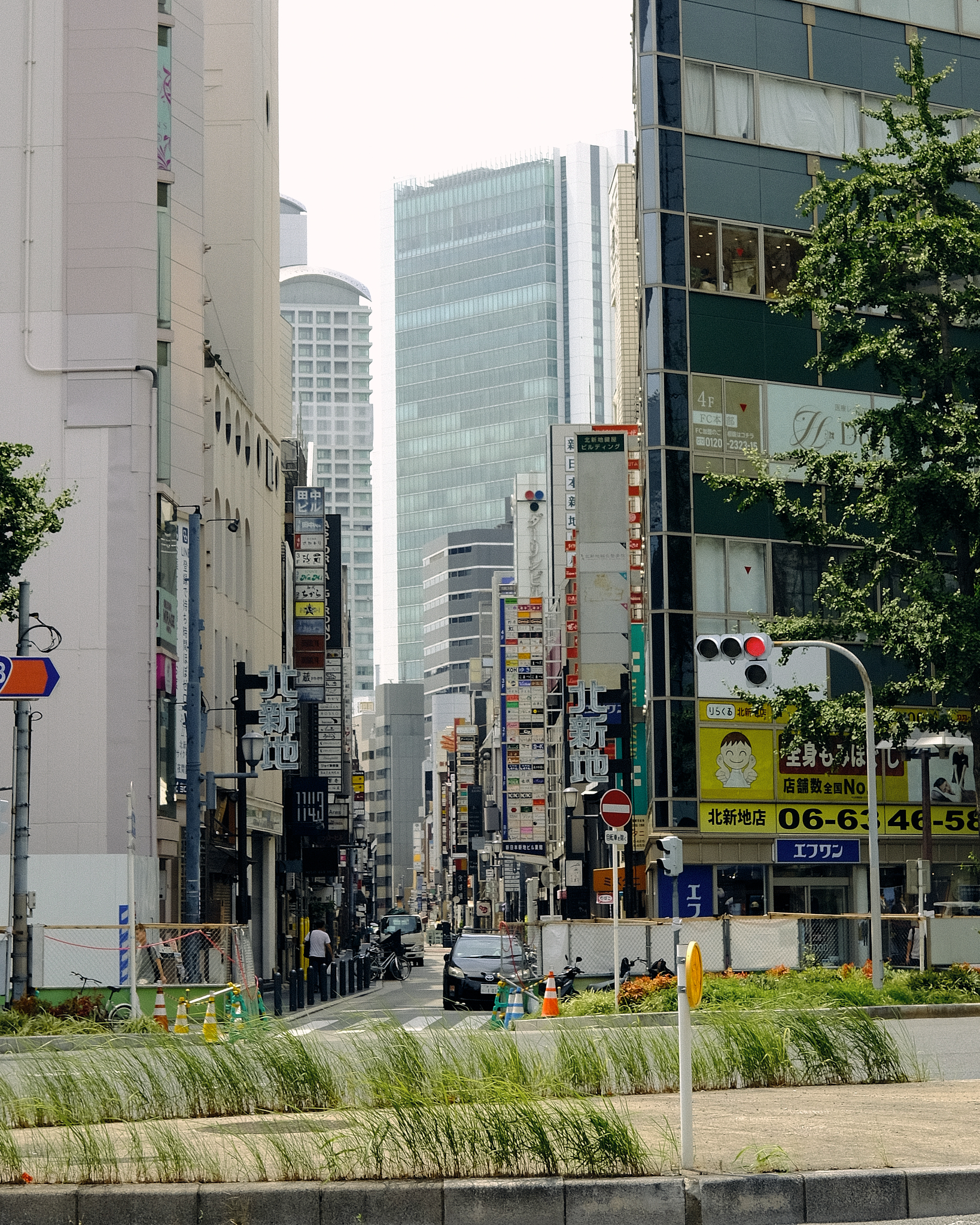

If you're preparing to study in Osaka—whether at a language school, university, or graduate program—the question of where you'll live likely occupies significant mental space alongside academic concerns. Unlike countries where universities provide comprehensive on-campus housing, Japan's system creates a housing reality where most international students must navigate the private rental market, understand shared housing options, or compete for limited dormitory spaces.
The good news: Osaka offers international students more housing options and better affordability than Tokyo. The challenge: each housing type involves trade-offs that significantly affect your study experience, budget, and social integration. Understanding these options before you arrive prevents the common pattern of accepting whatever housing your school arranges by default, then discovering months into your program that better alternatives exist.
This guide explains how student housing actually works in Osaka, what hidden costs and complications affect international students specifically, and how to make informed decisions that support both your academic success and quality of life in Japan.
Before examining specific options, understanding how student housing in Osaka differs from systems in other countries sets realistic expectations.
The Limited University Dormitory Reality
Most Japanese universities maintain international student dormitories, but capacity rarely meets demand. Osaka University, for instance, operates several dormitories with rents ranging from ¥18,000-48,000 monthly including utilities, but priority goes to exchange students, scholarship recipients (particularly MEXT scholars), and first-year international students. By your second year, you're typically expected to find private accommodation.
Osaka University dormitories like Tsukumodai offer rooms from approximately ¥35,000-48,000 monthly for shared units, with studio options at higher rates. However, even if you're fortunate enough to secure dormitory housing initially, the maximum stay is typically one to two years—meaning you'll eventually navigate the private housing market regardless.
The application timing matters critically. Dormitory applications often close months before your program begins, requiring you to make housing decisions before receiving visa approval or finalizing your study plans. Miss the application window, and dormitory housing becomes unavailable regardless of later availability.
Why Housing Affects Your Entire Experience
Your housing choice influences far more than just where you sleep. It shapes your daily commute time and costs (ranging from 10 minutes to 90+ minutes depending on location), your ability to participate in evening university activities and social events, your food costs (access to cooking facilities versus eating out), your study environment and ability to concentrate, your social integration with Japanese and international communities, and your financial stress level throughout your studies.
Students who prioritize minimizing rent by accepting housing far from campus often discover that transportation costs, time lost to commuting, and isolation from university life offset the savings. Conversely, students who choose expensive central apartments sometimes find themselves working excessive part-time hours to afford rent, compromising their studies.
For students who secure university dormitory placement, the advantages are substantial—but understanding the constraints and application realities matters.
The Cost Advantage
Kansai University's Minami-Senri International Plaza charges ¥48,000 monthly (rising to ¥53,000 in 2026), with utilities, internet, and linens included. This all-inclusive cost is dramatically below private rental markets where comparable accommodation costs ¥60,000-80,000 monthly before utilities, internet, and furniture.
Osaka University dormitories range from approximately ¥18,000-48,000 monthly depending on room type and building, with some including utilities in the rent while others charge separately. Even at the higher end, these costs remain well below private market alternatives.
The Built-in Community
Dormitories provide instant social networks—critical for international students arriving in an unfamiliar country. You're surrounded by other students, often both international and Japanese, creating natural opportunities for friendship, cultural exchange, and mutual support navigating university life.
Many dormitories include Resident Assistants (RAs)—Japanese students who help international residents with practical matters like translating official mail, explaining garbage sorting rules, and answering questions about daily life. This built-in support dramatically reduces the stress of cultural adjustment.
The Constraints Nobody Mentions
Dormitory life comes with significant restrictions that some students find challenging. Most dormitories enforce curfews or sign-in requirements, prohibit overnight guests or have strict visitor policies, maintain rules about noise, cooking, and alcohol, include regular room inspections, and require participation in community cleaning duties.
Kansai University's dormitory is located about 15 minutes by bike from the Senriyama Campus, meaning you're not literally on campus despite the "student housing" designation. This commute adds time and eliminates the spontaneous campus access some students expect.
Additionally, dormitory stays have time limits. Most universities offer one to two years maximum, requiring you to find alternative housing mid-program—often while simultaneously managing coursework, part-time work, and research demands.
The Competitive Application Reality
Securing dormitory placement requires navigating competitive application processes with early deadlines. Universities prioritize certain categories—government scholarship students, exchange students from partner institutions, first-year students—meaning regular private-pay students often fall lower in priority.
The application typically requires proof of university acceptance, financial documentation showing ability to pay rent and living expenses, sometimes recommendations or essays explaining why you need dormitory housing, and submission months before your program begins.
If you're not in a priority category, applying early doesn't guarantee success—demand simply exceeds supply at most universities.
Share houses (sheaa hausu) have become increasingly popular among international students in Osaka, offering a middle ground between dormitories and private apartments.
Understanding the Share House Model
In share houses, you rent a private bedroom while sharing common areas—kitchen, bathrooms, living spaces—with other residents. Residents are typically mix of international students, Japanese students, working holiday visa holders, and young Japanese professionals. Buildings range from converted houses accommodating 5-10 residents to large purpose-built share houses with 50+ rooms.
The rental model differs from Western "shared apartments" where friends jointly rent. In share houses, each resident has an individual contract with the management company, and you don't choose your housemates—the company assigns residents as rooms become available.
The Financial Accessibility
Share houses solve multiple financial obstacles that block international students from standard rentals. Monthly rent in Osaka share houses typically ranges from ¥35,000-65,000 depending on room size, location, and facilities. Initial costs are dramatically lower than private apartments—often just one month's rent plus a small deposit, compared to the 4-7 months' rent required for private apartments.
Most share houses include furniture, eliminating the ¥150,000-300,000 furniture and appliance expense that private apartments require. Utilities and internet are typically included in monthly rent, simplifying budgeting. And critically for students, most share houses don't require guarantors—the single largest obstacle international students face in private rentals.
The Social Trade-Off
For students arriving in Osaka with no existing social network, share houses provide instant community. You're living with people navigating similar challenges—adjusting to Japan, improving Japanese language, exploring Osaka, managing limited budgets. Many share houses organize events, language exchanges, and social activities that facilitate friendships.
However, shared living requires compromise and tolerance. You're sharing kitchens with strangers whose cooking times may conflict with yours and whose cleaning standards may differ from yours. You're sharing bathrooms and competing for shower times during peak morning hours. You're accepting noise from housemates' different schedules—some studying late into the night, others leaving early for work.
Privacy is limited. Your bedroom provides retreat space, but you can't control the common area environment. If you're an introvert who recharges alone, or someone accustomed to living independently, share house life can feel exhausting.
The Location and Quality Variation
Share house companies operate properties across Osaka with dramatically different character. Some occupy well-maintained modern buildings in convenient locations near universities and transit. Others use older, cheaper buildings in outer areas where your commute might be 60-90 minutes each way.
Major share house operators like Oakhouse, Borderless House, and various local companies maintain different standards, price points, and house atmospheres. Some specialize in international residents and emphasize cultural exchange. Others house primarily Japanese residents with occasional internationals. The house culture—cleanliness, noise levels, social dynamics—varies dramatically by location and current resident composition.
Research and visiting properties before committing matters. The cheapest share house in the most remote location might save ¥15,000 monthly on rent but cost ¥12,000 monthly extra on transportation plus 15-20 hours weekly in commute time—terrible math for students prioritizing study efficiency.
For students who value privacy, control, and independence, private apartments remain the goal—but navigating the rental process as a student involves specific challenges.
The Standard Rental Obstacles
Everything discussed in general Osaka rental guides applies to students, but several factors make student applications particularly challenging. Student visas create landlord hesitation since students typically have limited income, rely on family financial support from overseas, have no Japanese employment to verify, and might leave suddenly if visa renewal fails or studies are interrupted.
Many landlords simply refuse student applications, particularly from language school students whose visa validity is shorter and perceived stability lower than university students. The properties you can actually access represent a constrained subset of the market—often older buildings, less convenient locations, or slightly higher-priced properties where landlords accept students to compensate for reduced demand.
The Income Verification Challenge
Rent for a one-room apartment near language schools in central Osaka ranges from ¥30,000-40,000 monthly for basic accommodation. However, Japanese rental applications require proving monthly income of at least 3x the monthly rent. For a ¥40,000 apartment, you need documented income of ¥120,000 monthly.
Most international students don't have this. You're living on savings, family support, or limited part-time work (legally restricted to 28 hours weekly during school terms). How do you prove income that doesn't technically exist?
Some students provide bank statements showing sufficient savings to cover rent for the lease duration. Others rely on parents or sponsors providing financial guarantee letters. But many landlords and guarantor companies don't accept these alternatives—they want Japanese employment income, which students can't provide.
The Guarantor Company Necessity
Universities often partner with specific guarantor companies like Global Trust Networks (GTN) that specialize in student applications. These companies understand student financial situations and accept applications based on enrollment proof, scholarship documentation, or sponsor financial guarantees rather than requiring Japanese employment.
However, guarantor companies charge fees—typically ¥20,000-40,000 initial fee plus ¥10,000-15,000 annual renewal. For budget-constrained students, these costs matter. Some universities subsidize guarantor fees or include them in overall student support, but many students pay out-of-pocket.
The Furniture and Setup Burden
Japanese apartments come unfurnished. As a student arriving with suitcases, you need to purchase refrigerator (¥20,000-40,000 for basic models), washing machine (¥20,000-35,000), bed or futon (¥15,000-30,000), desk and chair for studying (¥10,000-20,000), cooking equipment and dishes (¥10,000-20,000), lighting fixtures (¥5,000-15,000), and curtains (¥3,000-8,000).
Total: ¥80,000-170,000 minimum for basic setup. Many students spend months gradually accumulating these items, initially sleeping on the floor, eating convenience store food because they lack cooking equipment, and studying at university libraries because their apartment lacks proper desk lighting.
Some students purchase used items from graduating international students or recycle shops (secondhand stores), reducing costs substantially. But this requires Japanese language ability to navigate Facebook groups or local shops, transportation to collect items, and time to hunt for deals—resources new arrivals often lack.
Many international students use guest houses or monthly rental apartments as temporary housing while settling in, then transition to permanent accommodation once they understand their needs and navigate the rental process.
The Furnished Convenience
Guest houses provide hotel-like accommodation with dormitory-style rooms or small private rooms, typically renting by the week or month. Monthly rent ranges from ¥40,000-80,000 depending on location, room type (dormitory beds versus private rooms), and facilities. All furniture, utilities, and internet are included, allowing immediate occupancy.
Monthly apartments (manshon-gatsu) offer small furnished studios on monthly contracts without the long-term commitment or large initial costs of standard rentals. Expect to pay ¥80,000-120,000 monthly for basic accommodation in convenient locations—significantly more than comparable unfurnished apartments but without furniture costs or long-term obligation.
The Strategic Transitional Use
Arriving in Osaka, checking into a guest house for your first month, and using that time to view private apartments, apply to share houses, or navigate dormitory applications makes sense. You avoid making housing commitments from overseas with incomplete information, you're physically present to view properties and attend contract signings, and you've separated the stress of international arrival from the stress of housing search.
However, living in guest houses or monthly apartments long-term becomes expensive. A ¥60,000 monthly guest house bed saves money compared to a ¥80,000 private apartment, but if you could access a ¥45,000 share house or ¥35,000 outer-area apartment, the guest house actually costs significantly more while providing less space and privacy.
The pattern many successful international students follow: arrive in temporary furnished accommodation, spend your first two to four weeks settling into school and life, then aggressively search for permanent housing to secure before your temporary arrangement becomes expensive.
Beyond rent, international students face costs that generic housing guides don't emphasize but significantly affect financial sustainability.
The Transportation-Housing Trade-Off
Language schools note that apartments near central Osaka rent for ¥30,000-40,000 monthly, while properties further from campus might be ¥20,000-25,000. That ¥10,000-15,000 monthly savings looks attractive until you calculate transportation costs.
If your cheap distant apartment requires a 60-minute commute, your commuter pass might cost ¥15,000-20,000 monthly—wiping out rent savings while costing you 10-15 hours weekly in transit time. For students on tight schedules balancing classes, part-time work, and study, this time loss may be more costly than money.
The optimal strategy: calculate total cost (rent + transportation) and total time commitment. Sometimes paying ¥10,000 more monthly for housing 15 minutes from campus delivers better value than the "cheaper" distant option.
The Part-Time Work Necessity
Student visa holders can work up to 28 hours weekly during school terms and 8 hours daily during holidays, but actually securing reliable part-time work takes time. The first months in Osaka, you're relying entirely on savings or family support to cover rent, food, transportation, and unexpected expenses.
Students who choose housing at the upper limit of their budget often discover that rent eats savings faster than anticipated, creating financial stress that forces intensive job hunting during the critical adjustment period when they should be focusing on language improvement and academic success.
The safer approach: budget housing at a level you can afford without part-time income for your first six months, treating any part-time earnings as safety cushion rather than necessary rent payment.
The Social Isolation Cost
Housing far from campus or in areas without other international students creates isolation that affects mental health and academic success. You spend weekends alone in your apartment because getting to social events requires 90-minute commutes. You miss spontaneous study groups because you need to catch the last train home. You feel disconnected from university life, gradually becoming disengaged.
This isolation is invisible in initial housing cost calculations, but it's real and affects why you came to Osaka—cultural immersion, friendship, full university experience. For some students, the cheapest housing becomes the most expensive mistake.
Your program type significantly affects housing accessibility and support available.
University Student Advantages
University students benefit from established international student offices providing housing support, partnerships with guarantor companies and real estate agencies, access to university dormitories (even if limited), information sessions and orientation programs about housing, and longer visa validity creating more landlord acceptance.
Universities like Osaka University, Kansai University, and Ritsumeikan maintain housing support staff who understand international student challenges and can intervene with landlords or guarantor companies when applications face obstacles.
Language School Student Challenges
Language school students often face more housing difficulty. Visa duration is shorter (six months to two years typically), landlords perceive language students as less stable than university students, fewer dormitory options exist since most language schools don't operate their own housing, and institutional support is limited—many language schools offer housing lists but little active assistance.
Some language schools like Osaka Gakuin University arrange specific housing options that don't require expensive deposits and accept short-term contracts, but these are exceptions. Most language students navigate housing independently or rely on share houses that accept shorter contracts.
The practical reality: if you're attending language school, expect to rely heavily on share houses or monthly apartments rather than standard rentals, and budget accordingly.
International students face a timing paradox that creates unnecessary stress and suboptimal housing decisions.
The Visa-Housing Chicken-and-Egg
Universities and schools often require proof of housing before issuing enrollment documents for your visa application. But landlords and dormitories want to see your visa and residence card before accepting applications. You're caught between two requirements, neither willing to proceed without the other.
The practical workaround: many students use temporary addresses—booking a guest house for their first weeks, having the school list that as your initial address, obtaining your visa, then searching for permanent housing after arrival. However, this approach means making housing decisions quickly after arrival while managing jet lag, orientation, and cultural adjustment.
The Peak Season Crunch
Japanese academic years begin in April, creating massive housing demand during February-March. International student programs also start in October, creating smaller but significant demand spikes. If you're trying to secure housing during these periods, competition intensifies, good properties disappear quickly, and you have less leverage to negotiate terms or initial costs.
Starting your housing search well before these peak periods—or accepting that during peak season you'll face limited inventory—sets realistic expectations.
Throughout this guide, the complexity of student housing in Osaka has become evident. Unlike countries where universities comprehensively handle student housing, Japan's system requires students to navigate processes designed for working adults with stable incomes and Japanese language fluency.
What Real Estate Professionals Provide
Agents specializing in international student housing offer specific value: knowledge of which landlords actually accept student applications despite lower income, relationships with guarantor companies that approve student profiles, understanding of which neighborhoods offer best value for students balancing budget and commute, experience presenting student applications to maximize approval probability, and navigation of timing issues between visa applications and housing needs.
Many real estate companies in Osaka maintain student-specific services, understanding that standard rental processes don't accommodate student realities. They know which properties have accepted previous international students successfully, which buildings have English-speaking management reducing ongoing communication friction, and how to structure applications when students lack standard documentation.
The School Housing Office Limitations
University international student offices provide valuable housing lists, orientation information, and general guidance. However, they're advising hundreds of students simultaneously with small staff and limited time. Their housing lists often include the same properties that have worked with previous international students—reliable but not comprehensive, potentially missing better options.
Real estate agents focused on student housing maintain broader market knowledge and can match your specific budget, location preferences, and situation to properties beyond generic school-provided lists.
The Share House Company Question
Share house companies market directly to international students, making booking seem straightforward. However, not all share houses deliver equal value, quality, or experience. Some maintain excellent facilities and responsive management; others cut corners, ignore maintenance issues, or overcrowd properties.
Professional housing advisors familiar with Osaka's share house landscape know which companies maintain quality, which neighborhoods offer convenient access to major universities, and which properties receive consistent positive feedback versus complaints from international residents.
As an international student preparing for Osaka, your housing approach should consider several factors.
Your program length affects housing strategy—shorter programs (six months to one year) favor share houses or monthly apartments avoiding long-term commitment and large upfront costs, while longer programs (two years or more) justify investment in private apartments once you understand your needs.
Your budget reality must account for total costs—not just monthly rent but transportation, utilities (if not included), furniture and setup (for private apartments), initial costs (4-7 months' rent for standard leases), and financial cushion for unexpected expenses.
Your personality and social needs matter—if you're extroverted and value community, share houses or dormitories provide social infrastructure. If you're introverted and need private space to recharge, investing in private apartments despite higher costs may be necessary for your wellbeing and academic success.
Your Japanese language ability affects which options you can navigate independently—students with functional Japanese can explore broader housing markets, while those with limited Japanese benefit from housing options with English support.
The decision isn't just about finding the cheapest bed—it's about securing housing that enables your academic success, supports your wellbeing, and allows you to actually experience life in Osaka beyond just surviving.
Ready to navigate Osaka's student housing market with guidance that understands your unique situation? At Maido Estate, we specialize in helping international students find housing that balances budget constraints, university proximity, and quality of life. Our multilingual team (English, French, Japanese) understands the obstacles students face—limited income documentation, short visa validity, tight budgets—and works with landlords, guarantor companies, and share houses that welcome international students. Whether you're arriving soon or already in Osaka struggling to find suitable housing, we help you understand what's realistically accessible within your student budget and situation. Contact Maido Estate today to discuss your study plans and discover housing options that support your academic success in Osaka.
About Maido Estate: Licensed real estate agency in Osaka specializing in helping international residents, including students, with renting throughout the Kansai region. Our team understands the unique challenges students face and connects you with housing options that actually accept student applications.


