Furnished Apartments in Osaka
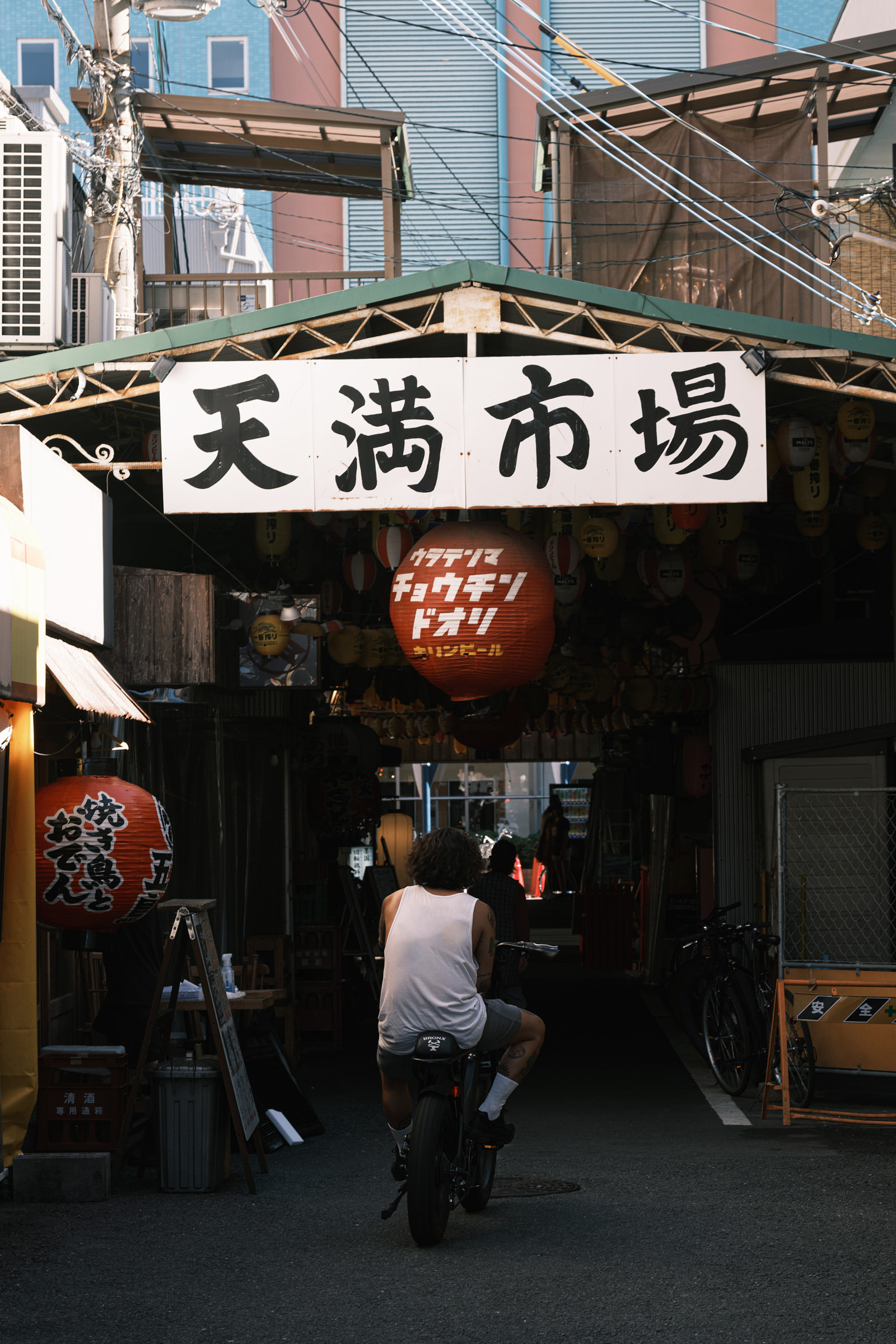

When you're moving to Osaka from abroad, "furnished apartment" sounds like the obvious answer. You're arriving in a new country, you don't know how long you'll stay, you don't want the hassle of buying furniture in Japanese, and the idea of walking into a ready-to-live apartment on day one is genuinely appealing. It makes complete sense as a starting instinct.
Here's what most people discover only after they've started seriously searching: the furnished apartment market in Osaka is significantly more expensive than the standard rental market, the premium charged to foreign tenants is real and documented, the quality and completeness of what "furnished" actually means varies enormously, and — critically — Japan has one of the most accessible secondhand furniture markets in the world, which changes the cost calculation considerably.
This article examines the furnished apartment landscape honestly: what's available, what it costs, why the foreigner premium exists, and why an unfurnished apartment combined with Japan's remarkable secondhand economy often ends up being the better financial and practical decision for most foreign residents in Osaka.
Unlike hotel-serviced apartments in other global cities where "furnished" implies a standardized fit-out, furnished rental units in Osaka exist on a spectrum with no regulated definition. When a listing says kagu tsuki (家具付き, furnished) or kaden tsuki (家電付き, appliances included), you need to look carefully at what's actually included.
At the fuller end, a genuinely equipped furnished unit might include: bed frame and mattress, desk and chair, sofa, dining table and chairs, washing machine, refrigerator, microwave, air conditioning (which in Japan is almost always separate from the main fit-out), and basic kitchen equipment. This is a unit you can functionally live in from day one.
At the thinner end — which is more common than the listings suggest — "furnished" might mean a bed, a small refrigerator, and a microwave. No sofa, no washing machine, no dining setup. You've paid the furnished premium and you're still making three trips to a home goods store in the first week.
Air conditioning deserves particular mention because it's so frequently misunderstood by foreigners. In Japan, AC units are fixed appliances that are typically the landlord's property and listed as standard features, separate from furniture. A "furnished" listing that leads with AC as a feature isn't telling you much — in any reasonable apartment in Osaka, working AC is baseline, not a differentiator.
Separate from the standard furnished rental market are weekly mansions (ウィークリーマンション) and monthly mansions (マンスリーマンション) — Japan's version of serviced short-term rentals, typically fully equipped and available on flexible month-to-month terms without the standard lease deposit structure.
These are a genuine category with genuine use cases — corporate relocations, trial periods before committing to a longer lease, arrival accommodation while a longer-term unit is being arranged. But they operate on a completely different cost structure and are not directly comparable to standard furnished rentals. We'll address their specific role and limitations later in this article.
The furnished apartment market in Osaka has a structural dynamic that isn't widely discussed but is immediately apparent to anyone working in it: furnished units are disproportionately marketed toward and priced for foreign tenants. The reasons are layered.
Japanese renters overwhelmingly prefer unfurnished apartments. This is cultural and practical — most Japanese renters have furniture, plan to stay for several years, and want to equip their space according to their own preferences. The demand for furnished rentals in the domestic market is thin, concentrated among single young professionals changing cities for work and typically willing to pay only a modest premium.
Foreign tenants, by contrast, are perceived as higher-willingness-to-pay for furnished units because they arrive without furniture, often have corporate relocation budgets or simply lack the time and confidence to navigate buying furniture in Japanese. This perception is accurate for a portion of the foreign rental market, and it shapes how furnished inventory is priced.
The result: furnished apartments in Osaka carry a monthly premium over equivalent unfurnished stock that typically ranges from ¥20,000 to ¥60,000 per month, depending on location and the completeness of the fit-out. For a mid-range 1LDK in a central Osaka neighborhood, a furnished unit listing at ¥140,000/month would often be available unfurnished at ¥100,000–¥110,000/month in the same or a comparable building.
Over a 12-month lease, that gap represents ¥360,000–¥600,000 in additional rent. Over 24 months — Japan's standard lease term — it exceeds ¥700,000 in many cases.
The furnished premium isn't only in the monthly rent. Furnished units also tend to carry:
Higher deposits: Landlords and management companies charge higher security deposits on furnished units to cover potential damage to or loss of furnishings. 2–3 months' rent as a deposit is more common in this segment than in standard unfurnished rentals.
Stricter cleaning and restoration clauses: Move-out restoration (genjokaifuku, 原状回復) expectations on furnished units can be more extensive, with specific requirements around furniture condition documented at move-in that must be matched at move-out or charged against the deposit.
Less negotiating room on fees: Furnished units aimed at the foreign market are typically marketed at firmer prices with less room for the fee negotiation — on key money, agency commission, or guarantor structure — that is more available in the standard unfurnished market.
Here is the part of the furnished vs. unfurnished calculation that most foreign arrivals genuinely don't know before they arrive: Japan's secondhand goods market is one of the most developed, accessible, and well-maintained in the world, and Osaka is one of the best cities in Japan for it.
The cultural context is important. Japanese consumers upgrade frequently, tend to sell rather than discard, and the social norm around secondhand goods is genuinely neutral in a way that differs from many Western markets. The result is a secondhand ecosystem — across physical shops, dedicated online platforms, and local community marketplaces — where the volume of available goods is large, condition is typically excellent, and prices are low in absolute terms.
Hard-Off / Book-Off chain stores: Japan's most prominent secondhand retailer network, with multiple locations in and around Osaka. Their furniture and appliances sections are well-organized, priced clearly, and cover everything from basic washing machines and refrigerators to sofas, beds, and dining sets. A functional washing machine in usable condition typically runs ¥5,000–¥15,000. A solid bed frame with mattress: ¥10,000–¥25,000. A decent sofa: ¥8,000–¥20,000.
Mercari: Japan's dominant consumer-to-consumer marketplace, with millions of active listings including an enormous volume of furniture and household goods. Osaka listings alone cover every category at prices that reflect the true secondhand market rather than retail markup. The platform is available in English-friendly interfaces and ships nationally — though for furniture, local pickup is standard.
Junk Michael, 2nd Street, and regional chains: Additional secondhand retail networks with solid Osaka presence and comparable inventory.
Facebook Marketplace and expat community groups: Osaka's international resident community generates consistent secondhand furniture supply, particularly around March–April (Japan's moving season) when turnover is highest. Listings here are in English, priced for quick sale, and often include delivery assistance.
What does it actually cost to equip a 1K or 1LDK apartment in Osaka from scratch using the secondhand market? Based on direct experience sourcing for incoming clients:
ItemSecondhand rangeWashing machine¥5,000–¥15,000Refrigerator¥8,000–¥20,000Bed frame + mattress¥10,000–¥25,000Sofa¥8,000–¥20,000Dining table + chairs¥5,000–¥15,000Desk + chair¥3,000–¥10,000Microwave¥3,000–¥8,000Curtains¥3,000–¥8,000Misc. (kitchen, storage)¥5,000–¥15,000Total¥50,000–¥136,000
A completely equipped 1LDK sourced thoughtfully from secondhand channels in Osaka costs approximately ¥80,000–¥120,000 all-in for a functional, comfortable, presentable setup. A nicer setup with selective new purchases for specific items (mattress, for example, if condition of secondhand options doesn't meet your standard) might run ¥150,000–¥200,000.
Compare that to the ¥360,000–¥600,000+ annual rent premium on a furnished equivalent. The secondhand furniture route pays for itself in 2–4 months of the rent difference, and for the remainder of your lease, you are saving money every single month.
One concern foreigners raise about buying furniture is the exit question: what do you do with it when you leave? In Japan, this is less complicated than it seems. The same secondhand channels that sell furniture also buy it — Hard-Off will assess and purchase usable items from your apartment directly. Mercari listings for furniture in reasonable condition in Osaka typically sell within days. The Japan-specific sodai gomi (粗大ごみ) system for large item disposal is organized, affordable (typically ¥200–¥1,000 per item), and doesn't require navigating a landfill.
The furniture exit in Japan is more organized than in most countries. It's a solvable problem, not a deterrent.
This isn't an argument that furnished apartments are always wrong for every foreigner. There are specific situations where the premium is genuinely justified:
Short stays of 3 months or less: If you're in Osaka for a defined short period — a project, a language intensive, a bridge period before a long-term move — the all-in cost of a monthly mansion or serviced apartment often beats the transaction cost of a standard lease (deposit, agency fee, guarantor setup) combined with furniture sourcing and disposal.
Arrival accommodation while searching for a long-term unit: Using a monthly mansion for the first 4–6 weeks while you search properly for a long-term unfurnished apartment is a legitimate and often underused strategy. You're not rushing the permanent search under housing pressure, and you're not paying the furnished premium indefinitely.
Corporate relocation with a housing budget: If your employer is providing a housing allowance calibrated to furnished apartment rates, taking a furnished unit and keeping the change is a valid calculation. The premium is your employer's cost, not yours.
Genuinely full-service serviced apartments for executive relocations: A tier of Osaka serviced apartments — particularly those attached to larger hotel or residential tower complexes in Namba, Umeda, and Nakanoshima — offers a level of service (daily cleaning, concierge, utilities included) that justifies a higher monthly cost for specific profiles.
The situations where furnished doesn't make economic sense are the majority: stays of 6 months or more, any situation where you're paying the rent yourself, and any case where the furnished unit is a standard apartment with basic kit rather than a genuinely serviced offering.
In Osaka, furnished rental inventory concentrates in specific zones that have historically hosted the highest density of foreign short-to-medium-term residents: the areas immediately around Namba and Shinsaibashi, the Umeda / Fukushima corridor, and to a lesser extent the Tanimachi and Tennoji areas. This is also where the tourist and short-stay Airbnb market concentrates, and the overlap between furnished rental and short-term accommodation supply creates specific dynamics.
Some buildings in these zones have a significant proportion of their units operating as furnished rentals at various lease lengths — a mix of standard furnished rentals, monthly mansions, and registered Airbnb operations. Building character, management quality, and lease term flexibility vary considerably within individual buildings.
For foreign applicants, the application process for a furnished apartment isn't fundamentally different from standard rentals — you still need a guarantor arrangement, you still go through a management company screening, and your visa status and income documentation are evaluated the same way. The furnished premium doesn't buy you a simplified application process.
What can differ: monthly mansions and serviced apartments often operate on simpler application structures with no guarantor requirement and no agency fee, compensated for by significantly higher monthly rates and a minimum stay requirement rather than a standard lease.
If you're on a visa type that creates guarantor compatibility challenges — a working holiday visa, a short-term business visa, or a newly issued investor visa — monthly mansions for arrival accommodation while you establish your longer-term situation can be a legitimate solution. Our guide on renting a place without a residency in Japan covers the non-resident rental landscape in detail.
Whether you're looking for a furnished unit for a specific short-term need, or you're interested in an unfurnished apartment with a secondhand furniture strategy, the most important variable is understanding which properties are genuinely accessible to your profile — before you pay an agency fee on an application that was always likely to be declined.
Maido Estate's Room Finder service conducts the search on your behalf. You share your situation — arrival date, budget, intended stay length, visa status, whether you want furnished or are open to unfurnished with assistance sourcing secondhand furniture — and we identify the properties that genuinely fit. For clients open to the unfurnished route, we can also point you toward the most effective secondhand channels for your specific unit type and neighborhood, having been through this process with dozens of incoming foreign residents in Osaka.
The Room Finder isn't just a listing aggregation service. It's a matching process that uses ground-level market knowledge to find you the right apartment at the right cost — not the most convenient-seeming option at an inflated foreigner-facing price.
Read the full explanation of how the service works here: Osaka Room Finder — How Maido Estate Searches for the Right Apartment on Your Behalf.
Let's put the numbers side by side for a typical scenario: a foreign resident arriving in Osaka planning to stay 18–24 months, working in a central location, needing a 1LDK apartment.
Option A — Furnished apartment:
Option B — Unfurnished apartment + secondhand furniture:
The difference is approximately ¥970,000 over 24 months — roughly $6,500 USD or €6,000 at current rates. For that saving, you get an apartment you've chosen and equipped to your own preferences, furniture you can resell rather than simply leave behind, and a lease structure that typically comes with lower deposits, more negotiating room on fees, and a wider selection of available units.
The furnished route has its place. But for most foreign residents in Osaka staying longer than a few months, it is genuinely not the optimal financial decision — and it's worth knowing that before you start your search, rather than after you've signed a lease.
If you're planning a move to Osaka and weighing your housing options — furnished or unfurnished, short-term or standard lease, which neighborhoods make sense for your situation — start with a conversation with Maido Estate. We'll give you an honest picture of what's available for your profile, what the real all-in costs look like across your options, and whether the furnished premium actually makes sense for where you are.
No pressure, no commitment. Just clarity on what's realistic.
Maido Estate is a licensed real estate agency based in Osaka, Japan, specializing in helping foreign nationals rent, buy, and invest in Japanese property. We operate across the Kansai region in English, French, and Japanese.


