Renting in Umeda
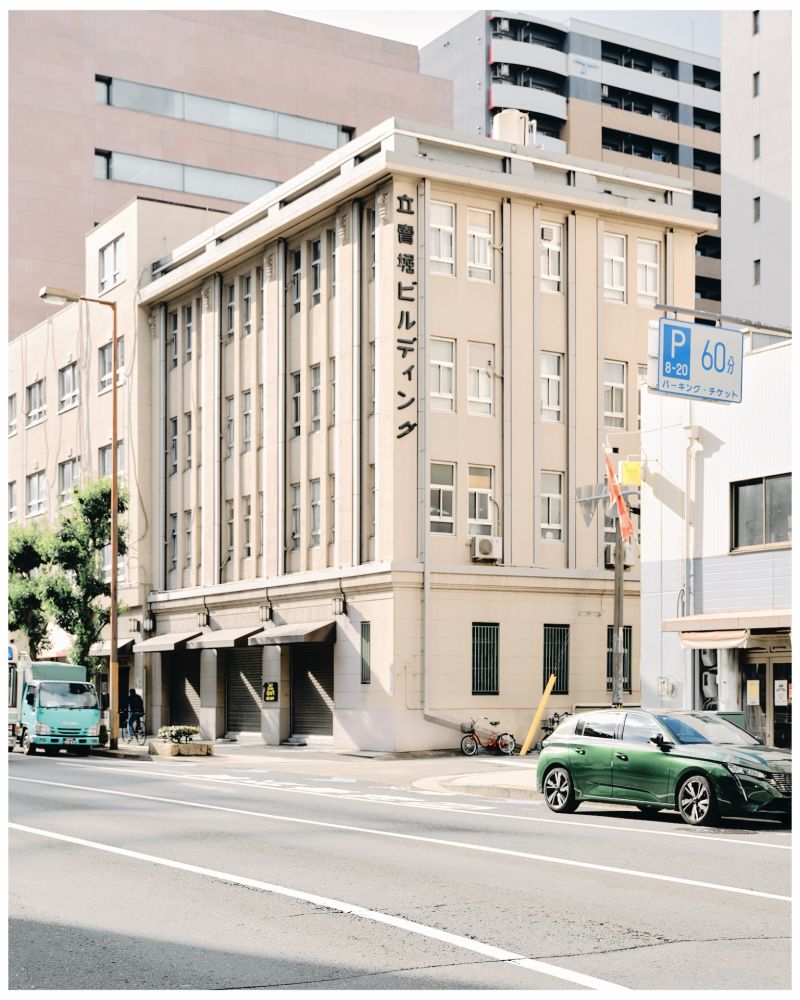

Umeda represents a different proposition entirely from Namba when foreigners search for apartments in Osaka. While Namba sells itself on entertainment and tourist appeal, Umeda functions as Osaka's primary business center—and that distinction shapes everything about the rental experience here. At Maido Estate, we guide foreign clients through Umeda's market regularly, and the conversations always start the same way: the client wants convenience and modern amenities, and they assume Umeda's business district polish means a straightforward rental process.
The reality is more nuanced. Umeda offers specific advantages that matter enormously to certain foreign residents, particularly professionals relocating for work. But it also presents challenges that don't appear in listing descriptions, and understanding those challenges before you start your search saves substantial time and frustration.
Umeda sits in Kita Ward (Kita literally means "north"), forming Osaka's northern downtown hub. The area centers on the massive station complex where JR Osaka Station, Hankyu Umeda Station, Hanshin Umeda Station, and multiple subway lines converge. This is the busiest station complex in all of western Japan, handling millions of passengers daily.
The district has transformed dramatically over the past two decades. The construction of landmark buildings like Umeda Sky Building and the redevelopment of Osaka Station City have shifted Umeda from a purely business district into a mixed-use area with major retail, dining, and residential components. Ongoing projects like the Umekita development continue reshaping the landscape.
For foreigners, this means Umeda now offers a hybrid environment: serious corporate infrastructure during business hours, extensive shopping and dining options, premium residential towers, and surprisingly good access to Kyoto and Kobe. But it also means the area never developed the same foreigner-friendly rental ecosystem that areas like Namba cultivated. The properties here weren't built with international tenants in mind—they were built for Japanese corporate employees and affluent local residents.
The apartments available for rent in Umeda fall into distinct categories, each with different implications for foreign applicants.
A significant portion of Umeda's rental inventory exists specifically for corporate relocation—Japanese companies lease entire floors or buildings, then place their transferred employees in these properties. These apartments typically feature:
The challenge: these properties rarely hit the open market. Companies contract directly with the building management, and even when units become available to individual renters, the screening assumes Japanese employment documentation, Japanese guarantors, and Japanese language ability for building communication.
Some foreign companies have arrangements with specific buildings, which gives their employees access. If you're relocating to Osaka for work with an established international company, ask HR about corporate housing partnerships—this bypasses much of the normal rental friction. But if you're self-employed, working remotely for a foreign company, or with a Japanese startup, you're competing in the open market where these properties rarely accept foreign applicants without substantial additional requirements.
Umeda hosts several high-rise residential towers offering premium amenities: concierge services, fitness centers, meeting rooms, spectacular views, and modern Western-style layouts. Monthly rent for a one-bedroom in these buildings typically starts around ¥150,000 and scales up to ¥300,000+ for larger units with exceptional views or corner positions.
These properties do lease to foreigners, but they apply strict screening criteria. The income requirement is typically 3-4 times the monthly rent (so ¥450,000-¥600,000 monthly income for a ¥150,000/month apartment). They want to see stable, documentable employment—employment contracts, recent pay stubs, and often employer reference letters. If you're working remotely for a foreign company or self-employed, expect additional scrutiny and potentially higher deposits.
The advantage of these buildings: they're managed by sophisticated property management companies accustomed to dealing with foreign executives and entrepreneurs. They have English-speaking staff, experience with various visa types, and standardized processes for guarantor company arrangements. The screening is strict, but it's transparent. You'll know within a week whether your application succeeds or fails, and if it fails, you'll understand why.
Beyond the corporate and luxury tiers, Umeda has standard residential apartments—older buildings (1980s-2000s construction), smaller units, less dramatic amenities, but notably lower rent. A studio or 1K in these properties might rent for ¥60,000-¥85,000, putting them in competition with apartments in Namba from a pure cost perspective.
These properties present the biggest challenge for foreign applicants. They're owned by individual landlords or small management companies without English-speaking staff, without established guarantor company relationships, and with limited experience leasing to foreigners. The landlord isn't opposed to foreign tenants in principle, but they also haven't developed systems to handle the documentation differences, communication barriers, and perceived risks.
This is precisely where a broker's value becomes apparent. We know which of these properties have successfully leased to foreigners before, which landlords are genuinely flexible versus merely polite during initial inquiries, and how to structure applications to address specific concerns these landlords typically raise.
When foreigners say they want to live in Umeda, they usually mean within walking distance of Osaka Station or the major department stores. But the rental market uses "Umeda" more broadly, encompassing neighborhoods that are technically separate but market themselves using the Umeda name for prestige and convenience association.
This is the area immediately surrounding Osaka Station—roughly a 5-10 minute walk in any direction. Properties here command the highest rents: ¥85,000-¥120,000+ for studios, easily ¥150,000-¥200,000+ for 1LDKs. You're paying for the ability to walk to the station, walk to work, walk to shopping, and walk to entertainment without using any transportation.
The tradeoff: noise, density, and a complete absence of neighborhood character. You're living in an intensely urban commercial zone. If you value quiet, residential atmosphere, or any sense of community, central Umeda will disappoint. This is purely about convenience and proximity to infrastructure.
Just north and northeast of Osaka Station, these neighborhoods offer a different proposition. Nakatsu is 5-10 minutes from Umeda by foot or one subway stop away. Nakazakicho has developed a reputation as an artistic, retro-styled neighborhood with narrow alleyways lined with independent cafes, vintage shops, and street art. The area attracts photographers and creative professionals, giving it a distinctly different atmosphere from corporate Umeda.
Rent drops ¥10,000-¥20,000 compared to central Umeda for equivalent space. A 1K that costs ¥90,000 right next to Osaka Station might rent for ¥70,000-¥75,000 in Nakatsu. The buildings tend to be older—1980s and 1990s construction—but they're still well-maintained and functional.
The landlord dynamics here favor foreign applicants more than in central Umeda. These are residential neighborhoods, not corporate zones. Landlords have experience with various tenant types, including foreign residents, students, and young professionals. The screening is still standard Japanese process—income verification, employment documentation, guarantor requirements—but the baseline willingness to consider foreign applicants is higher.
West of Umeda, Fukushima offers perhaps the best balance of Umeda access and residential livability for foreigners. The area is one stop from Osaka Station on the JR Loop Line or a 10-15 minute walk. It maintains excellent connectivity while providing actual neighborhood atmosphere—izakayas, small restaurants, local supermarkets, and a residential population that isn't just transient office workers.
Rent is comparable to Nakatsu—¥60,000-¥80,000 for studios, ¥80,000-¥110,000 for 1LDKs. The buildings skew older (1970s-1990s), which means lower rent but also potential issues with insulation, soundproofing, and dated fixtures. Some properties have been renovated; others retain their original condition. This creates opportunity for negotiation—you might accept an unrenovated unit in exchange for reduced rent or waived key money.
Foreign approval rates in Fukushima are solid. The area has always housed a mix of demographics, and landlords here prioritize stable, long-term tenants over specific nationality or cultural background. If you have documentable income and can work with a guarantor company, you'll find options here.
The documentation challenge in Umeda differs somewhat from other Osaka neighborhoods because of the business district context. Landlords here are accustomed to corporate tenants with standard Japanese employment arrangements, and their screening processes reflect these expectations.
The gold standard: a Japanese employment contract, recent pay stubs showing stable income, and a company contact who can verify your employment. If you're working for a Japanese company—even a foreign company's Japanese subsidiary—this documentation exists in the expected format, and your application process will be straightforward.
The complications arise when:
In these cases, landlords want to see proof of income that they can understand and verify. Bank statements showing regular deposits help, but they're not always sufficient. A letter from your employer on company letterhead, explaining your position, salary, and employment duration, carries substantial weight—especially if it's translated into Japanese by a professional translator.
For self-employed applicants, tax returns become critical. Japanese landlords want to see at least one year of Japanese tax returns if you've been in Japan, or your home country's equivalent with professional translation if you're newly arrived. The income shown needs to be at least 3 times the monthly rent, and preferably documented across multiple years to demonstrate stability.
At Maido Estate, we help foreign clients understand which documents will actually satisfy specific landlords before they invest time gathering paperwork. A document that works perfectly for one property might be insufficient for another, and knowing this in advance prevents wasted effort and application rejections that hurt your rental history.
Umeda properties almost universally require either a personal guarantor (a Japanese resident, usually a family member or close friend, who agrees to cover your rent if you default) or a guarantor company arrangement. For foreigners without Japanese family or long-term Japanese friends, guarantor companies are the only realistic option.
The process works like this: you apply to a guarantor company, provide documentation of your income and residency status, and pay a fee (typically 50-100% of one month's rent initially, then sometimes annual renewal fees of 10,000-20,000 yen). If approved, the guarantor company guarantees your rent payments to the landlord. If you default, they pay the landlord and pursue you for the debt.
The complexity: not all guarantor companies approve all applicants, and not all landlords accept all guarantor companies. Some Umeda properties only work with specific, established guarantor companies that have strict approval criteria. If your employment situation is non-standard, you might get rejected by the guarantor company before the landlord even reviews your application.
Premium and corporate housing buildings in Umeda typically have established relationships with multiple guarantor companies, giving you options if one rejects you. Standard residential properties often only approve one or two specific companies, creating a bottleneck—if those companies won't approve you, the property becomes inaccessible regardless of your actual financial stability.
We maintain relationships with several guarantor companies and know their approval patterns. When we screen properties for clients, we're also checking whether the required guarantor company will realistically approve that client's specific profile.
A typical 1LDK in Umeda runs around ¥100,000/month. Let's use this figure to understand the total initial costs you'll face:
Total: Approximately ¥580,000-¥660,000 (roughly $3,900-$4,500 USD)
This is for a mid-range 1LDK. For premium towers or larger apartments where monthly rent exceeds ¥150,000-¥200,000, scale these costs proportionally. You might need ¥800,000-¥1,000,000+ in liquid funds just to secure a lease.
The key money (reikin) tradition persists strongly in Umeda's standard residential market. Premium buildings and corporate housing sometimes waive key money as a competitive advantage, but individual landlords in older buildings almost always require it. This represents pure cost—you're not getting the money back, it's not applied to rent, it's simply a customary payment to the landlord for accepting you as a tenant.
Foreigners often react negatively to key money, viewing it as an exploitative practice. The historical context doesn't really matter for your decision—what matters is that it's standard, and declining to pay it eliminates most available properties. Budget for it, negotiate when possible (slower rental markets sometimes allow key money reduction), but don't expect to avoid it entirely.
Before committing to Umeda, understand what living here actually entails day-to-day. The experience differs substantially from other Osaka neighborhoods.
Umeda's defining characteristic is comprehensive convenience. Multiple train lines converge here—JR lines, private railways including Hankyu and Hanshin, and three separate Osaka Metro subway lines. You can reach Kyoto in 30 minutes, Kobe in 20 minutes, Nara in 45 minutes, and Kansai Airport in about an hour, all via direct trains from Osaka Station.
For foreigners building a life in Japan while maintaining international connections, this connectivity is invaluable. You can live in Umeda and treat Kyoto as an extension of your daily radius. Weekend trips to Kobe, Nara, or even Hiroshima become logistically simple. Business travel to Tokyo via Shinkansen from nearby Shin-Osaka Station requires minimal commute time.
The shopping and dining infrastructure supports international lifestyles. Department stores stock imported foods, cosmetics, and household goods that might be difficult to source in more local neighborhoods. International restaurants—not tourist-oriented joints but actual quality international cuisine—concentrate here because they can rely on consistent customer flow from foreign professionals and Japanese businesspeople accustomed to international dining.
Banking, administrative services, and business infrastructure all center on Umeda. When you need to visit your bank, handle visa matters at immigration, or meet with accountants or lawyers for business matters, the offices are either in Umeda or easily accessible from it.
The tradeoff for Umeda's convenience is the complete lack of residential neighborhood feeling. This isn't a place where you know your neighbors, where local shop owners recognize you, or where you develop a sense of belonging to a community. It's a commercial zone that happens to have residential units within it.
For some foreigners, this is perfect. If you're in Osaka for a limited work assignment, if your social life centers on activities and connections rather than neighborhood relationships, or if you simply value privacy and anonymity, Umeda's impersonal atmosphere isn't a drawback—it's a feature.
For others, particularly those planning to stay in Japan long-term and wanting to build genuine local connections, Umeda can feel isolating. You're surrounded by people, but they're transient—office workers during the day, shoppers in the evening, weekend tourists. The actual residents are either affluent Japanese professionals who maintain private social lives, or corporate housing tenants who will rotate out in a year or two.
One notable characteristic of Umeda is how dramatically the atmosphere changes outside business hours. After office workers head home in the evening, the business district areas can feel somewhat sterile and quiet compared to more residential neighborhoods. The restaurants and bars that cater to after-work crowds continue operating, but the energy shifts noticeably.
Compare this to neighborhoods like Namba, Tennoji, or even Fukushima, where residential populations create continuous activity regardless of time or day. In those areas, you can find late-night grocery shopping, discover small bars with regular customers, or just experience the ambient life of people actually living their daily routines.
In Umeda, convenience stores remain open 24/7, but that's different from neighborhood vitality. You can always get what you need, but you rarely stumble into unexpected local experiences or spontaneous human connections.
The business district context creates specific friction points for foreign applicants that don't exist as prominently in more diverse neighborhoods.
Umeda landlords unconsciously assume tenants are corporate employees. The entire screening process—required documentation, income verification methods, reference checking—is designed around standard Japanese company employment. When your situation doesn't fit this model, the screening process doesn't fail outright, but it becomes awkward and slow.
Landlords don't know how to evaluate a foreign company's employment letter. They don't understand how to verify income from international wire transfers. They're unfamiliar with visa categories beyond standard work visas. This creates hesitation, not because they're opposed to foreign tenants, but because they don't have confidence in their ability to properly assess the application.
In areas like Tennoji, Nishinari, or parts of Naniwa Ward, landlords have developed pragmatic approaches to foreign applications through repeated experience. They've learned what actually matters (stable income, long-term intent, basic communication ability) versus what's merely formatting preferences. Umeda landlords, having mostly dealt with standard corporate tenants, haven't developed this practical wisdom.
Buildings in Umeda often have residents' associations, building rules, and expectations for communication with management that assume Japanese language ability. This isn't about daily conversation—it's about understanding notices about maintenance, participating in emergency procedure briefings, and handling administrative matters.
Premium buildings with English-speaking concierge services mitigate this concern. But standard residential properties in the Umeda area rarely have bilingual staff. If a pipe bursts at 2 AM, if there's a fire alarm malfunction, if renovations in adjacent units create noise concerns, the property management expects to communicate these issues in Japanese.
Landlords worry about this communication gap creating problems. They've experienced situations where foreign tenants didn't understand important notices, missed mandatory building meetings, or couldn't communicate effectively during emergencies. These experiences, even if rare, create lasting hesitation.
At Maido Estate, we serve as the ongoing communication bridge. When issues arise, the property management contacts us, we translate and explain to the tenant, and we ensure appropriate responses. This ongoing advocacy role is often more valuable than the initial apartment search assistance, particularly for foreigners without strong Japanese language skills.
Umeda landlords have higher expectations for long-term tenancy than landlords in some other areas. The business district context means they're accustomed to stable, multi-year tenants—Japanese corporate employees who stay for 2-5 years or more.
Foreigners, statistically, have higher turnover rates. Whether due to visa issues, job changes, family circumstances, or simply deciding Japan isn't the right long-term fit, foreign tenants more frequently break leases early or don't renew after the initial two-year term.
Early lease termination in Japan typically requires 1-2 months' notice and forfeiture of your deposit beyond normal wear and tear. But it also creates hassle and cost for landlords—remarketing expenses, vacancy periods, uncertainty about finding replacement tenants. In Umeda's competitive rental market, landlords feel they can be selective, choosing tenants least likely to create turnover issues.
You can't change your foreign status, but you can signal long-term intent through your application. If you're starting a Japanese company, building a career with a Japanese employer, or have family reasons for long-term Japan residence, make this explicit in your application. Brokers know how to frame these details to address turnover concerns without overpromising.
Understanding Japanese apartment types matters particularly in Umeda because the building stock varies dramatically by age and target demographic.
Newer buildings in Umeda (post-2000 construction) feature compact but well-designed studios. A typical modern 1K might be 20-25 square meters, with efficient layout maximizing usable space. These units include proper separation between living space and kitchen/entrance area, good storage solutions, modern bathroom fixtures, and often small balconies.
Monthly rent typically runs ¥75,000-¥100,000 for these units, depending on exact location and building amenities. They're designed for single professionals—people who spend most waking hours at work or out in the city, using the apartment primarily for sleep and basic living.
For foreigners accustomed to larger spaces, these studios feel restrictive. You can't realistically cook elaborate meals (the kitchen is truly minimal—two-burner stove, small sink, minimal counter space). Storage is limited—if you accumulate belongings, they dominate your space. Entertaining guests means everyone's essentially in your bedroom.
But for the target demographic—foreign professionals on 1-3 year assignments, or young expats prioritizing location over space—these studios work well. You're paying for the convenience of living in Umeda, not for residential comfort.
Step up to 1DK (one room plus dining-kitchen) or 1LDK (one room plus living-dining-kitchen), and both space and cost increase substantially. These apartments typically run 30-45 square meters, with monthly rent from ¥100,000-¥150,000+ depending on building and exact location.
The separate living area makes a meaningful difference in livability. You can actually cook, you have space for a dining table, guests don't have to sit on your bed, and you can mentally separate work/living activities within your home.
Buildings with these layouts in Umeda typically date from the 1990s-2010s. Some have been renovated and offer modern fixtures and finishes; others retain their original condition, showing their age through dated bathroom tiles, older kitchen appliances, and less efficient climate control.
The screening challenge increases with these properties. The higher rent means stricter income requirements (often 3.5-4 times monthly rent). The landlords assume you're either a successful professional or a couple, which brings different evaluation criteria. Single foreigners sometimes face more scrutiny for 1LDK applications than Japanese couples would, not due to explicit discrimination, but because landlords perceive single foreign tenants as higher turnover risks.
Umeda has substantial inventory of apartments built in the 1970s and 1980s, particularly in the surrounding neighborhoods like Nakatsu and Fukushima. These buildings offer larger spaces at lower rents, but with meaningful compromises.
Soundproofing in these older buildings is often poor—you'll hear neighbors, street noise, and adjacent commercial activity. Insulation is minimal, meaning higher cooling and heating costs and greater difficulty maintaining comfortable temperatures. The building systems (plumbing, electrical, elevator quality) reflect their age, and while building codes require safety upgrades, the daily experience feels dated.
On the positive side, these properties often provide the most accessible entry point to Umeda area living for foreign applicants. The lower rents mean lower income requirements, the individual landlords are often more flexible than corporate property management companies, and the buildings already house diverse tenant mixes including students, older residents, and some foreign tenants.
Before committing to Umeda, consider how nearby alternatives might better serve your actual priorities.
We discussed Fukushima earlier, but it deserves emphasis as perhaps the best alternative for foreigners who want Umeda's connectivity without its commercial sterility. One stop west on the JR Loop Line or a 15-minute walk from Osaka Station, Fukushima maintains legitimate neighborhood character while providing excellent access to everything Umeda offers.
The restaurant scene in Fukushima caters to locals rather than tourists or business diners, meaning better value and more authentic experiences. The residential population creates 24-hour neighborhood vitality rather than 9-to-5 commercial activity. Parks, local shrines, and community spaces exist within the neighborhood rather than being destinations you need to travel to.
Rent savings of ¥10,000-¥20,000/month compared to central Umeda might seem modest, but over a two-year lease, that's ¥240,000-¥480,000—nearly enough to cover your initial move-in costs for the next apartment.
For foreigners interested in arts, creativity, or simply something less corporate, both Nakatsu and Nakazakicho offer distinct character while maintaining easy Umeda access.
Nakatsu has a growing reputation among foreign residents, particularly those in creative industries or teaching. The area isn't trendy in the social media sense, but it's genuinely livable—supermarkets, convenience stores, local restaurants, parks, and functional residential infrastructure. The buildings tend to be older and smaller, but rent reflects this: ¥60,000-¥80,000 for studios that would cost ¥85,000-¥100,000 in central Umeda.
Nakazakicho has developed as an artistic neighborhood with retro atmosphere, narrow alleyways filled with independent cafes, vintage shops, and street art. The area attracts photographers, artists, and foreigners interested in aesthetic experiences. This creates a community of similar-minded residents, making it easier to develop local connections compared to Umeda's transient population.
Both neighborhoods are 5-10 minutes from Umeda on foot or one subway stop away. You maintain access to all of Umeda's infrastructure and connectivity while gaining neighborhood character and residential livability.
South of Umeda, Tennoji offers a completely different proposition—similar urban density and excellent transportation access, but with substantially lower rent and a more diverse demographic mix. We cover Tennoji in detail elsewhere, but in the context of comparing to Umeda, understand this:
A 1K that rents for ¥90,000 in Umeda might cost ¥65,000-¥70,000 in Tennoji. The commute to Umeda is 15-20 minutes by train. The neighborhood atmosphere is definitively more local and less polished, but for foreigners planning long-term Japan residence and wanting to integrate into actual local communities rather than expat bubbles, Tennoji often proves more satisfying.
The foreign approval rates in Tennoji are generally better than Umeda's standard residential market. Landlords there have more experience with international tenants, and the lower rent means lower income requirements, making approval processes less stressful.
For a comprehensive comparison of Osaka neighborhoods and which areas suit different foreign resident profiles, see our guide on the top 10 best Osaka neighborhoods.
Most foreigners start their Umeda apartment search by browsing English-language listing sites, identifying properties that seem perfect, then contacting agencies to arrange viewings. This approach fails more often than it succeeds for specific, predictable reasons.
Properties listed on English-language platforms often fall into one of several categories:
When you contact an agency about a specific listing, they'll typically respond positively, schedule a viewing, then either inform you the property is unavailable or—after viewing—reveal during the application phase that the landlord doesn't accept foreign tenants, requires specific documentation you can't provide, or has other barriers that weren't mentioned upfront.
This isn't necessarily deceptive. Many agencies genuinely don't know a property's foreign tenant policy until they contact the landlord, and they're optimistic about convincing landlords to make exceptions. But it creates frustration for foreign applicants who invest time viewing properties they ultimately can't rent.
Umeda is notorious for its vast underground shopping network that connects multiple stations and buildings. Locals often joke about the "Umeda Dungeon"—the impossibly complex maze of underground passages where even longtime Osaka residents sometimes get lost.
This physical complexity mirrors the rental market complexity. Just as the underground pathways require local knowledge to navigate efficiently, the rental market requires insider understanding to access properties that actually work for foreign tenants. You can see the listings (just as you can see the underground shops), but knowing which paths lead to your destination requires pattern-matched experience.
Brokers who regularly work the Umeda market know which buildings have successfully leased to foreigners, which management companies are genuinely flexible versus merely polite, and which individual landlords will consider non-standard documentation. This knowledge isn't published anywhere—it's accumulated through repeated transactions and ongoing relationships.
When you find a property you want to apply for, how you structure and present your application significantly affects approval odds. The same applicant with the same documentation can be approved by one landlord and rejected by another, depending on how the application is framed.
Experienced brokers understand which aspects of your profile address specific landlord concerns. If the landlord worries about communication, emphasize your Japanese study or your bilingual colleague who can assist with building matters. If the concern is stability, highlight your long-term employment contract or your family reasons for staying in Japan. If it's financial risk, proactively offer additional deposit or prepaid rent.
You don't know which concerns a specific landlord prioritizes until you've worked with them repeatedly. Brokers compress this learning curve by applying pattern-matched knowledge from hundreds of previous applications.
At Maido Estate, we approach Umeda differently than tourist-focused or volume-based agencies. We're not trying to place maximum numbers of foreign tenants into any available properties. We're matching specific foreign clients with properties where approval is genuinely likely and where the living situation will actually satisfy their needs.
When a client comes to us wanting to live in Umeda, we start with a realistic assessment of their position in the rental market. If their employment situation, visa status, or documentation presents challenges, we tell them directly what those challenges are and how they affect property options. This isn't discouragement—it's strategic focus. We'd rather concentrate effort on 10 properties with genuine approval prospects than scatter applications across 30 properties where most will ultimately reject.
We've built relationships with landlords and management companies across Umeda through years of consistent, professional transactions. When we submit an application, those landlords know we've already pre-screened the tenant for their specific requirements. This doesn't guarantee approval—nothing does—but it substantially improves odds compared to cold applications from unknown agencies.
We explain all costs and timelines upfront, including the substantial initial costs you'll face. We help you understand which elements of the lease are negotiable (start dates, minor repairs, occasionally rent or key money in slower markets) and which are fixed. We prepare you for the documentation gathering process and ensure you understand why each document matters.
Most importantly, we remain your advocate throughout your tenancy, not just through lease signing. When you need to report maintenance issues, when you have questions about utility bills, when you're ready to renew your lease or discuss renewal terms, we're your contact point. For foreign residents navigating a system in a foreign language, this ongoing relationship often proves more valuable than the initial apartment search itself.
Umeda isn't universally better or worse than other Osaka neighborhoods—it serves specific priorities better than alternatives while compromising on other factors.
Umeda makes sense when:
Consider alternatives when:
If you're seriously considering an apartment in Umeda, several practical steps will improve your search efficiency and application success rates.
Before contacting properties or brokers, gather and review your documentation. You'll need:
If any documents are in languages other than English or Japanese, budget for professional translation. Machine translation isn't sufficient for official applications, and amateur translation can create misunderstandings that harm your application.
If you're not yet in Japan, understand that you'll need Japanese address and phone number to complete most lease agreements. Some landlords accept hotel or temporary housing addresses; others don't. This needs clarification during your property search, not after you've found an apartment you want.
We cover the complete process and catch-22 situations in our guide on essential steps to rent an apartment in Japan.
Don't just calculate what monthly rent you can afford—calculate what total initial costs you can handle. As we detailed earlier, you might need 5-6 times the monthly rent in liquid funds just to secure the lease. If you're stretching financially to afford Umeda's rent, you likely can't handle the initial costs without severe strain.
Be honest about ongoing costs too. Monthly rent is just the starting point. Add utilities (¥8,000-¥15,000/month depending on season and usage), internet (¥4,000-¥6,000/month), groceries (budget more in Umeda than in more residential neighborhoods—convenience costs), and transportation if your work isn't walking distance. Your actual monthly housing costs might run 20-30% above the listed rent figure.
Umeda properties move quickly when they're desirable and reasonably priced. But the application and approval process still takes 2-4 weeks typically, and sometimes longer if there are documentation complications or slow landlord responses.
If you're arriving in Japan for new work, you need temporary housing for at least a month, possibly longer. If you're timing your move around specific dates, build in substantial buffer. The process cannot be reliably compressed below certain thresholds, and trying to force faster timelines usually leads to accepting suboptimal properties because you're desperate to secure something.
If Umeda genuinely suits your priorities and your situation realistically positions you for approval, the productive next step is a consultation where we can understand your specific circumstances and give you honest assessment of what's possible.
We can discuss:
This conversation isn't high-pressure sales. Many clients leave our initial meeting with adjusted expectations—sometimes expanding to nearby neighborhoods they hadn't considered, sometimes adjusting their budget or timeline, sometimes realizing they need additional documentation before actively apartment hunting. These are valuable realizations to reach early, not after weeks of frustrating searches.
Contact Maido Estate to start a conversation about your Umeda apartment search. We'll give you a realistic assessment of what's possible for your specific profile and help you understand the path from where you are now to holding keys to your new apartment in Osaka's business district.
Umeda offers genuine advantages for foreign professionals and residents who prioritize connectivity, modern amenities, and comprehensive urban infrastructure. But accessing those advantages requires understanding the market dynamics, preparing appropriate documentation, and working with professionals who know how to position your application for success. The towers and business district prestige can absolutely be part of your Osaka experience—but getting there requires more strategic approach than simply browsing listings and filling out applications.


