Buying a Second-Hand Apartment in Japan
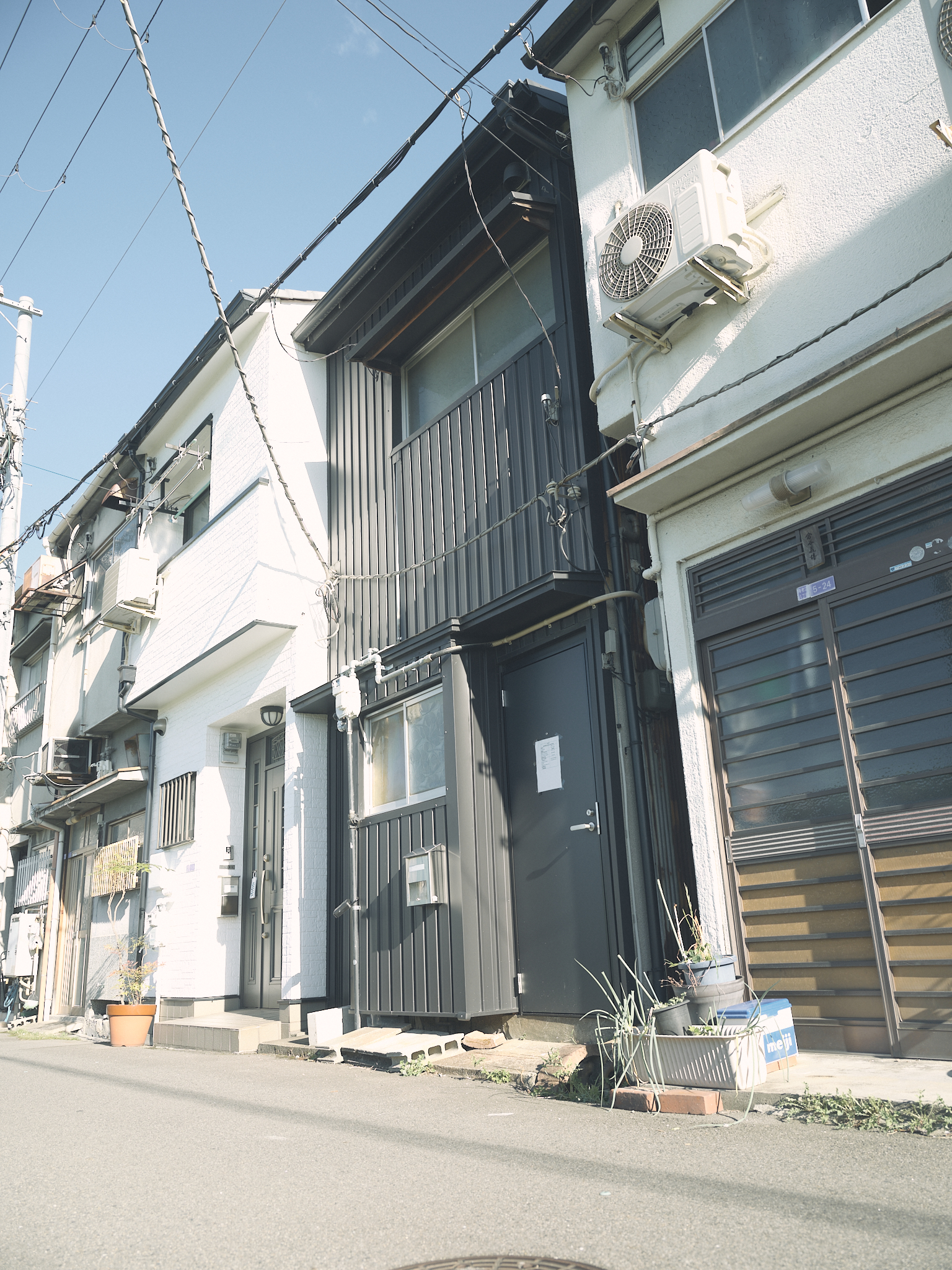

When foreign buyers think about purchasing property in Japan, the default image is often a new-build condominium — freshly finished, developer-backed, sold off a floor plan with a glossy brochure and an English-language sales office. That market exists, and it has its place. But the segment of Japan's real estate market that offers the most compelling value — particularly for buyers who know what they're looking at — is the resale market: second-hand apartments, known in Japanese as chūko manshon.
The resale market accounts for the majority of residential property transactions in Japan's major cities. It is where price discovery actually happens, where negotiation is most possible, and where an informed buyer with the right local knowledge can find quality assets at prices that the new-build market simply doesn't offer. It is also where the risks are most concentrated — building condition issues, concealed defects, administrative complications, and the specific challenges of buying a property with a history rather than a blank page.
This article explains how Japan's resale apartment market works for foreign buyers, what the unique risks and opportunities look like, and why the gap between a well-guided purchase and an uninformed one is larger here than in almost any other segment of the market.
IN THIS ARTICLE
The new-build condominium market in Japan is professionally marketed, well-organized, and accessible to foreign buyers — which is precisely why it attracts so much attention. Developer sales offices have English-speaking staff, glossy materials, and streamlined purchase processes. What they don't have is value in the sense that an investor or a careful end-user cares about.
New-build condominiums in Osaka — particularly in central wards — are priced to reflect the full cost of land acquisition, construction, developer margin, and marketing. In the current market, that often means per-square-metre prices that leave limited room for appreciation and yields that are compressed from day one. The buyer absorbs the new-build premium immediately, and the property enters the resale market the moment it changes hands.
The resale market operates differently. Prices reflect actual transaction history, negotiation, and — crucially — the specific condition and circumstances of each property and seller. A 15-year-old apartment in a well-maintained building in a central Osaka location can be acquired at 40–60% of the cost of a comparable new-build in the same neighborhood. If the building is sound, the unit is in good condition, and the purchase is made with appropriate due diligence, that price differential represents genuine value — not a compromise.
For investors specifically, the yield arithmetic of resale property is often significantly more attractive than new-build. Lower acquisition cost, equivalent rental income, better gross yield. The resale market is where Osaka's genuine investment returns are most accessible — provided the buyer knows what they're doing.
For broader context on Osaka's investment market and how it compares to Tokyo, our Osaka vs Tokyo real estate comparisoncovers the structural case for Osaka in detail.
Japan's approach to property depreciation is one of the most distinctive features of its real estate market — and one of the most misunderstood by foreign buyers arriving with assumptions from other markets.
In most Western real estate markets, land and buildings tend to appreciate together over time, or at least hold value. In Japan, buildings depreciate sharply and predictably, while land retains or appreciates in value. A reinforced concrete condominium building (tekkin konkurīto zō) has a standard fiscal depreciation period of 47 years under Japanese tax law. A wooden structure depreciates over 22 years. This isn't just an accounting convention — it reflects a cultural and practical reality in which Japanese buyers historically preferred new construction and assigned limited residual value to aging buildings.
The depreciation dynamic creates a pricing structure in the resale market that can look alarming to buyers from markets where 30-year-old apartments in good locations sell for more than new ones. In Japan, a 20-year-old condominium in a prime Osaka address will typically be priced at a significant discount to a new-build in the same location, even if the building is structurally sound, well-maintained, and practically indistinguishable in quality from newer stock.
For the informed buyer, this is not a warning — it is a feature. The depreciation has already happened. The price has already absorbed the cultural discount for age. What remains is a physical asset in a good location at a price that reflects its age more than its quality — and that, for investors and end-users who care about value rather than novelty, is exactly where opportunity lives.
The practical implication: in Japan's resale market, the building's age is a starting point for analysis, not a conclusion. What matters is not how old the building is, but whether the physical structure is sound and how well it has been maintained. These are two different questions, and both require investigation.
Japan's building code history introduces a specific variable that every resale buyer needs to understand: the 1981 earthquake resistance standard revision.
Japan revised its Building Standards Law in 1981, introducing what is known as the "new earthquake resistance standard" (shin taishin kijun). Buildings completed after June 1981 under the new standard are designed to withstand major earthquakes — specifically, to resist collapse in an earthquake of the scale of the 1995 Great Hanshin Earthquake, which devastated parts of Kobe and Osaka. Buildings constructed under the old standard (kyū taishin kijun) — completed before June 1981 — are built to different specifications, and their earthquake resilience is not guaranteed to the same degree.
This distinction is binary and consequential. For resale buyers, a building's completion date relative to June 1981 is one of the first things to establish. Pre-1981 buildings are not automatically unsafe — many have been retrofitted to modern standards, and reinforced concrete buildings of that era were often built to conservative specifications. But they require explicit verification of earthquake compliance, which adds complexity and cost to the due diligence process.
The practical impact extends beyond safety: pre-1981 buildings are harder to finance (for buyers with access to Japanese mortgages), may face stricter insurance terms, and are priced at an additional discount that reflects the market's perception of their risk profile. For a cash buyer with the capacity to conduct proper due diligence, a well-maintained, retrofitted pre-1981 building in a prime location can represent extraordinary value. For a buyer without that capacity, it is a risk not worth taking without expert guidance.
Japan's building code was revised again in 2000, specifically addressing the construction standards for wooden structures (mokuzō) following lessons from the 1995 earthquake. For buyers considering traditional wooden properties — machiya townhouses, older residential houses — the pre- and post-2000 distinction applies in the same way the 1981 threshold applies to concrete buildings. Our article on the costs of buying a traditional house in Japan covers the wooden property market in specific detail.
Japan has a disclosure framework for property sales — the jūyō jikō setsumeisho (Important Matter Explanation document) that agents are legally required to provide before contract signing. This document covers a range of material facts about the property. It does not cover everything. And the things it doesn't cover are often exactly what a foreign buyer, unfamiliar with what to look for, would miss.
Japan has specific disclosure obligations for properties where a death — particularly a violent or unnatural death — has occurred. These properties, known as jiko bukken or stigmatized properties, must be disclosed to prospective buyers and tenants under most circumstances. They trade at significant discounts — sometimes 20–40% below comparable non-stigmatized properties — and have an established secondary market among investors and budget-conscious buyers.
The disclosure obligation has limits: it applies for a defined period and under specific conditions. A property where a death occurred many years ago and has since been rented may not require disclosure to a new buyer. This is a known gap in the framework, and it matters for buyers in price ranges where a stigmatized property history might explain an unusually attractive asking price.
Buildings constructed before 2006 in Japan may contain asbestos in insulation, ceiling materials, or fire-resistant coatings. The disclosure requirement covers known asbestos presence, but survey obligations vary. Older buildings — particularly those constructed in the 1970s and 1980s during Japan's rapid development period — should be treated as potentially containing asbestos until verified otherwise, and the cost of remediation, if required, can be substantial.
Osaka is built on alluvial lowlands, and parts of the city are genuinely low-lying — areas of Namba, parts of Joto Ward, and sections along the rivers have flood risk profiles that affect property values and insurance costs. Hazard maps (hazādo mappu) published by the city identify flood-risk zones, but these are rarely discussed proactively in sales contexts. For ground-floor and lower-floor units in at-risk areas, this is a variable worth investigating explicitly.
Land subsidence (jiban chinka) is a separate issue, more relevant for standalone houses than condominiums, but worth understanding in Osaka's geological context. Our guide to Osaka wards and their characteristics touches on the geographic realities of different areas of the city.
A proportion of resale condominiums in Osaka are sold as investment properties with an existing tenant in place (orunari bukken). This is not inherently a problem — in fact, it can be attractive for investors who want immediate rental income without a re-tenanting period. But the terms of the existing tenancy — rent level, remaining lease period, tenant profile, and the condition of the relationship between tenant and management company — are all variables that affect the value and risk of the acquisition. An existing tenant at below-market rent on a standard lease has strong legal protections; getting them out, or renegotiating to market rate, is not straightforward.
Japan has a home inspection (houmu inspekushon) system that was formally encouraged by a 2018 government initiative aimed at improving confidence in the resale market. Inspections are not mandatory, but sellers of resale properties are now required to disclose whether an inspection has been conducted and, if so, to share the results.
A Japanese home inspection conducted by an accredited inspector (jitkushū tōrokusha) typically covers the structural frame for visible defects, water leakage signs in key areas (roof, exterior walls, wet areas), and the condition of major building systems. It is a visual inspection — it does not involve destructive investigation, specialist equipment for concealed defects, or assessment of seismic performance beyond visible structural integrity.
Standard Japanese inspections do not cover: electrical system condition beyond obvious defects, plumbing integrity beyond visible signs, air conditioning system performance, the condition of building common areas (which are the responsibility of the building management association), or any assessment of the building's earthquake resistance beyond what is visible. They do not include asbestos surveys, soil contamination analysis, or flood risk assessment.
For a foreign buyer purchasing a resale property in Osaka, a standard inspection is a minimum floor — not a comprehensive due diligence. Depending on the building age, the property type, and the purchase price, additional specialist assessments may be warranted. Knowing which additional checks are proportionate to which situations is the kind of judgment call that benefits from experience with the specific market and property type.
When you buy a condominium unit in Japan — resale or new-build — you are not just buying your unit. You are buying into a building that is collectively managed by all its unit owners through a management association (kanri kumiai). The health of that association, and the quality of the building management company it employs, has a direct and material impact on the value and livability of your unit over time.
Every condominium building in Japan is supposed to maintain a repair reserve fund (shūzen tsumitatekin) — a collectively accumulated pool of money used for major building repairs: exterior repainting, elevator replacement, waterproofing, rooftop maintenance. Buildings that have been consistently funded have the resources to conduct these repairs on schedule. Buildings where the reserve fund has been allowed to run low — through inadequate monthly contributions or poor financial management — face a reckoning when major repairs become necessary, typically in the form of a special assessment (rinji shūzenhi) levied on unit owners.
For a buyer, the state of the repair reserve fund is one of the most important pieces of information about a resale condominium — and one of the least visible from a listing. The fund balance, the monthly contribution rate, and the building's upcoming major repair schedule are all disclosable in the purchase process, but they require asking the right questions in Japanese and knowing how to interpret the answers.
A building with an underfunded repair reserve and a major exterior renovation scheduled in the next three years is a fundamentally different investment proposition from a building with a healthy fund balance and recent major repairs completed. The listing price won't tell you which you're looking at.
Beyond the financials, the active engagement of the management association matters. Buildings where owner participation in the association is high, where decisions are made transparently and on schedule, and where the professional management company is competent and responsive tend to maintain their physical condition and property values better over time than buildings where the association is passive or dysfunctional. For a non-resident foreign owner, a well-functioning building management structure is particularly important because it provides the oversight of common areas and building systems that the absentee owner cannot provide directly.
Our article on tower mansions in Osaka covers the building management dimension in the context of large-scale condominium buildings, which have their own specific management structure considerations.
The resale market is where negotiation in Japan's residential property market is most real. New-build developers rarely discount — their pricing is set, their margin is built in, and they have limited incentive to negotiate with individual buyers. Resale sellers are individuals with circumstances, timelines, and motivations that create genuine negotiating opportunities for informed buyers.
Japanese listing portals show the date a property was listed, and properties that have been active for six months or more without selling have usually accumulated because of a pricing issue, a disclosure issue, or a specific feature that has deterred buyers. For buyers who understand why a property has sat — and who can assess whether the reason is surmountable — these properties often represent the clearest negotiating opportunity. The seller's urgency increases with time, and a credible, cleanly structured offer carries more weight than it would have at listing.
Inherited properties — a significant and growing segment of the Japanese resale market as the population ages — are often sold by heirs who have limited emotional attachment to the property and primary interest in a clean, fast transaction. The price expectations of these sellers are sometimes set by dated market knowledge rather than current conditions, creating room for informed buyers to negotiate on the basis of current data.
As covered in our article on buying property in Japan as a cash buyer, the certainty and speed of a cash transaction has real value to Japanese sellers. In the resale market, where sellers are individuals rather than developers, this value is more tangible than in new-build contexts. A cash offer with a compressed settlement timeline, from a buyer whose paperwork is in order, is qualitatively different from a conditional offer dependent on financing approval.
One of the most interesting segments of Osaka's resale market is properties acquired specifically for renovation — known in the Japanese market as reform (from the Japanese-English construction rifōmu). This market has grown substantially in recent years, driven partly by government incentives for upgrading older housing stock and partly by a generational shift in Japanese buyer preferences toward customized interiors over standard new-build finishes.
A resale apartment that requires significant renovation trades at a meaningful discount to comparable move-in-ready stock. For a buyer willing to invest in a renovation — and who can manage the process effectively — the combination of a below-market acquisition price and a renovated interior can produce a property whose total cost is below the equivalent new-build or renovated-by-developer alternative, with the added benefit of design choices tailored to the buyer's preferences.
In Osaka, renovation costs for a full interior refresh of a standard 50–70㎡ apartment typically range from ¥3–8 million depending on the scope and quality of finishes. Kitchen, bathroom, and flooring replacements drive the majority of the cost. These figures are meaningful but are often well below the new-build premium embedded in comparable new construction pricing.
Renovating a Japanese apartment involves navigating building rules — most condominium management associations have renovation regulations covering structural restrictions, permitted materials, working hours, and contractor registration. For non-Japanese-speaking owners, managing a renovation remotely or with a language barrier adds a layer of complexity that needs to be addressed through local representation. The renovation planning, contractor selection, and management association approval process all require Japanese-language competence that most foreign buyers don't have independently.
For buyers interested in traditional property renovation — particularly machiya townhouses in the Kansai region — our article on preserving Kyoto machiya covers the cultural and regulatory context of renovating traditional structures.
The legal structure of a resale purchase in Japan is the same as for a new-build: sales contract, deposit, balance payment, title transfer through a judicial scrivener (shiho shoshi). But several practical dimensions of the process are more complex in a resale context, particularly for foreign buyers.
The jūyō jikō setsumeisho — the Important Matter Explanation — is delivered by the selling agent and covers material facts about the property. For a resale property, this document is more substantive than for a new-build: it includes the building's history, any known defects, the state of the management association, the repair reserve fund balance, any litigation involving the building, and disclosure of any relevant stigmatized property history. This document is in Japanese and runs to dozens of pages. Understanding it — not just signing it — is critical. Buyers who cannot read it in Japanese need someone who can read it accurately on their behalf, not a summary translation.
In a resale transaction, the seller has warranty obligations for concealed defects discovered after completion — but these obligations are time-limited and often subject to seller disclaimers. Many individual sellers of resale property in Japan negotiate a disclaimer of warranty liability (kakuho menseki tokuyaku) as a condition of sale, meaning that defects discovered after completion are the buyer's problem. This is not unusual and is sometimes acceptable depending on the price — but it affects the due diligence calculus significantly. A buyer accepting a no-warranty sale has eliminated one layer of post-purchase protection and needs to compensate with more thorough pre-purchase investigation.
Resale transactions in Japan typically close faster than new-builds — there is no construction period, and the property exists and can be inspected. From accepted offer to completion, a cash resale transaction can close in four to six weeks for a well-organized buyer. For buyers coordinating overseas fund transfers, this timeline needs to be managed carefully — the compliance and transfer process for large international wire transfers takes longer than most buyers expect. Our guide on international wire transfers in Japan covers what to anticipate.
For a full overview of the costs involved in buying property in Japan beyond the purchase price itself, our article on property acquisition costs in Japan is essential reading. And for the tax obligations that begin from the moment you own Japanese property, our guide to real estate taxes for non-residents covers what to expect.
The resale market is where local knowledge and professional relationships make the most concrete difference in a foreign buyer's outcome. The properties that represent genuine value in Osaka's resale market are not always the ones with the best listings or the most visible marketing. They are sometimes properties that have sat because of a presentation issue that a knowledgeable buyer can look through, or properties where the seller's circumstances create room for a thoughtful offer, or buildings where the repair fund and management history tell a story that is more positive than the age of the building suggests.
Finding those properties, reading the disclosure documents accurately, knowing which additional due diligence is warranted and which is excessive for the specific situation, and managing the offer and negotiation process in Japanese — this is what we do for our buyer clients at Maido Estate. We work across the Kansai resale market in English, French, and Japanese, with a focus on helping foreign buyers find value that isn't visible from the surface of a listing portal.
If you're considering a resale purchase in Osaka — whether you're a first-time Japan buyer or an investor adding to an existing portfolio — the most useful starting point is a conversation about what you're looking for and what the market currently offers for your profile and budget. No commitment required. Just an honest picture of the opportunity and what it takes to pursue it well.
Reach out through our contact page or browse current opportunities through our Room Finder.
Japan's resale apartment market is one of the most underutilized opportunities available to foreign buyers in Osaka — and one of the most demanding in terms of the knowledge required to navigate it well. A few key points worth holding onto:
The buyers who do best in Japan's resale market are those who arrive with accurate expectations, the right professional support, and the patience to find the right property rather than the most convenient one. In Osaka, for that profile of buyer, the opportunity is genuinely there.


